
Bathroom Lighting Ideas: Small Bathroom Lighting Tips to Brighten Dark Spaces
A small bathroom can feel cramped and shadowy without the right lighting, but the right setup makes the space look brighter and more open. The best way to brighten a small bathroom is by layering different types of lighting ambient, task, and accent so the room feels balanced and functional. This approach works whether you have natural light from a window or rely only on fixtures.

You can use modern LED bathroom lights, vertical sconces, or a lighted vanity mirror to create even illumination around the sink and mirror. For darker bathrooms without windows, recessed lights, under cabinet strips, and reflective surfaces help spread light evenly across the room. Choosing fixtures that fit the scale of your space keeps the design clean while boosting brightness.
Smart choices like flush mounts for low ceilings or sleek wall sconces for narrow layouts give you both style and function. By combining practical placement with energy efficient LEDs, you can transform even the smallest bathroom into a well lit and inviting space.
Key Takeaways
- Use layered lighting to balance brightness and function
- Choose compact, modern fixtures that fit small spaces
- Add smart solutions for bathrooms without natural light
Fundamentals of Small Bathroom Lighting

Small bathroom lighting works best when you combine the right types of light, place fixtures carefully, and choose energy efficient options. By focusing on function and design, you can make a small space feel brighter, larger, and more practical for daily use.
Understanding Lighting Types: Ambient, Task, and Accent

Every bathroom needs a balance of ambient, task, and accent lighting. Ambient lighting provides the main source of light, usually from ceiling fixtures like recessed lights or flush mounts. This ensures the entire room feels bright and usable.
Task lighting focuses on specific areas where you need clarity. The most important spot is the vanity. Vertical sconces or LED mirrors on either side of the mirror reduce shadows on your face, which is better than a single overhead bulb.
Accent lighting adds depth and visual interest. In a small bathroom, this could include LED strip lights under cabinets, a backlit mirror, or a small recessed light highlighting a shower wall. Accent lighting is not just decorative it helps reduce dark corners that make a room feel cramped.
A simple way to remember:
- Ambient = general brightness
- Task = focused clarity
- Accent = added dimension
Optimizing Light Placement for Small Spaces

Placement matters as much as fixture type. A single ceiling light in the center often casts shadows and leaves corners dim. Instead, spread light sources across the room to avoid uneven lighting.
At the vanity, mount fixtures at eye level on both sides of the mirror. This reduces glare and provides even illumination for shaving, makeup, or grooming. If side lighting isn’t possible, use an LED mirror or a horizontal light above the mirror, placed about 75–80 inches from the floor.
For showers or tubs, recessed lighting rated for damp areas works well. Position lights closer to walls rather than directly overhead to make the space feel larger. In very small bathrooms, under-shelf or strip lighting can brighten tight spots without taking up space.
Think of placement as layering light across surfaces walls, counters, and mirrors so no area feels left in shadow.
Energy Efficiency and LED Technology

LED lighting is the most practical choice for small bathrooms. LEDs use less energy than incandescent or fluorescent bulbs and last much longer often 15 to 25 years. This reduces replacement costs and keeps maintenance low.
LEDs also produce less heat, which is important in small, enclosed spaces. You can choose from different color temperatures:
- 2700K–3000K (warm white): softer, cozy light
- 3500K–4000K (neutral white): balanced for most bathrooms
- 5000K (daylight): crisp, bright light for tasks
Another advantage is flexibility. LED strip lights, backlit mirrors, and dimmable fixtures let you adjust brightness for different needs. For example, you can keep lights soft at night but increase brightness for detailed tasks.
By using LEDs throughout your bathroom, you save energy, improve light quality, and maximize space with slim, modern fixtures.
Layered Lighting Strategies for Small Bathrooms

Layered lighting helps you avoid shadows, improve visibility, and make a small bathroom feel brighter without adding more space. By combining different types of fixtures and controls, you create customizable lighting that works for both daily routines and relaxing moments.
Combining Overhead and Vanity Lighting

Overhead fixtures give you general illumination, but they often leave shadows on your face. Pairing them with vanity lighting ensures even coverage. For example, a flush mount or recessed ceiling light can brighten the room, while sconces or LED strips near the mirror provide focused task lighting.
Place vanity lights at eye level to reduce shadows under the eyes and chin. A common setup is two sconces on either side of the mirror or a linear LED bar above it. This layered approach balances ambient and task lighting, preventing dark corners and making grooming easier.
If space is tight, consider compact LED vanity mirrors with built-in lighting. These combine function and style while saving wall space. Matching the color temperature between overhead and vanity lights also keeps the room consistent and avoids harsh contrasts.
Balancing Natural and Artificial Light
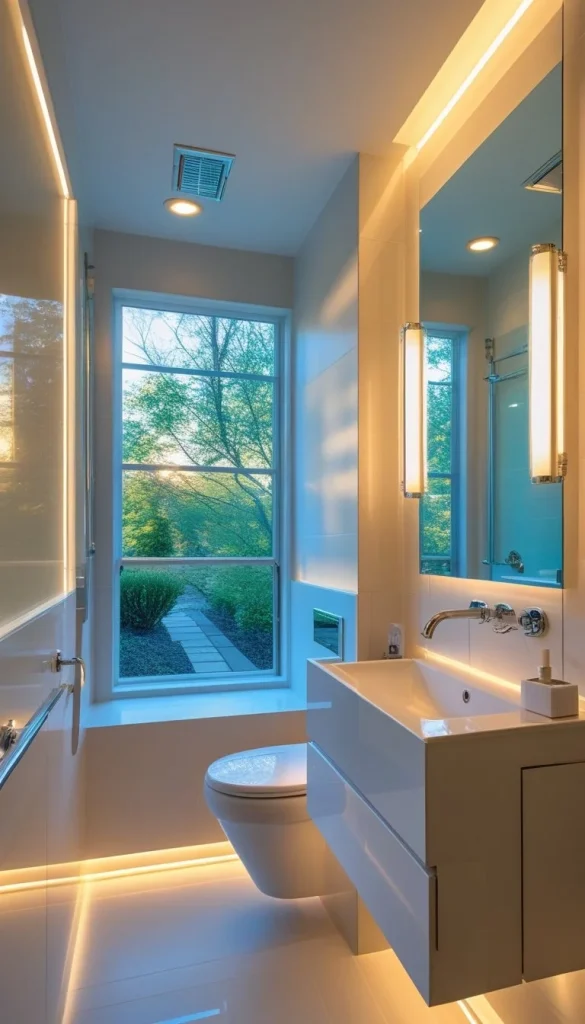
Natural light is limited in many small bathrooms, especially those without windows. Mirrors placed opposite windows can reflect daylight, but you still need artificial lighting to fill gaps. Recessed ceiling lights or wall mounted fixtures help spread brightness evenly when natural light is weak.
If your bathroom has a window, use light colored finishes like chrome or glass shades to amplify daylight. Pairing this with soft LED bulbs (2700K–3000K) keeps the space warm and comfortable. For windowless bathrooms, simulate daylight with full spectrum LED lights, which provide balanced brightness without feeling too cold.
A simple strategy is to use a three-layer system:
- Ambient lighting (overhead) for general brightness
- Task lighting (vanity) for grooming
- Accent lighting (toe kick or shelf lights) for depth
This mix ensures your bathroom stays functional and welcoming at any time of day.
Using Dimmer Switches for Versatility

Dimmer switches let you adjust brightness to match different needs. Bright light helps with shaving or applying makeup, while a softer glow works better for evening baths or late night visits. Adding dimmable lights gives you control instead of relying on one fixed brightness level.
You can install dimmers on overhead lights, vanity fixtures, or accent lighting. For example, lowering the ceiling lights while keeping vanity sconces bright creates a focused zone for grooming. This flexibility makes even a small bathroom feel more adaptable.
Choose LED compatible dimmers to avoid flickering. Many modern options also work with smart systems, letting you control brightness from a phone or voice assistant. This adds convenience while keeping energy use efficient.
Best Lighting Fixtures for Compact Bathrooms

Choosing the right fixtures can make a small bathroom feel brighter, more open, and easier to use. Different types of lights serve different purposes, from general illumination to focused task lighting, and the right mix can balance style with function.
Recessed Lighting for a Clean Look

Recessed lighting, also called pot lights or downlights, works well in compact bathrooms because the fixture sits inside the ceiling. This saves space while still providing strong overhead light.
You can use one large recessed light in the center of the room, or multiple smaller ones spaced evenly across the ceiling. In a shower or bath area, make sure the fixture is rated for damp or wet zones.
For best results, place recessed lights about 2 feet from the wall instead of directly in the middle of the ceiling. This highlights walls and makes the room appear wider. Pairing recessed lights with dimmers gives you control over brightness for tasks like shaving or for softer evening light.
Wall Sconces for Focused Illumination

Wall sconces provide targeted light and prevent shadows that overhead fixtures often create. They are especially effective around mirrors where you need even lighting for grooming.
Vertical wall sconces placed on each side of a mirror give a balanced glow across your face. This setup reduces harsh shadows under the eyes and chin. A narrow vertical fixture works well in tight spaces where a wide vanity light bar may not fit.
Choose sconces with shades that diffuse light to avoid glare. If you have limited wall space, a single sconce with adjustable arms can still provide useful task lighting. Wall sconces also add a design element, giving your bathroom a polished and intentional look.
Pendant Lights and Chandeliers for Style

Pendant lights and chandeliers add character but require careful placement in small bathrooms. A small pendant can work above a vanity or in the center of the room if ceiling height allows.
For safety, avoid placing pendants or chandeliers directly over a tub or shower. These fixtures need clearance from both water and headroom, which makes them better suited for bathrooms with higher ceilings.
If you want a chandelier, choose a compact model with simple lines instead of a large, ornate fixture. A single pendant over a vanity can replace a bulky light bar and provide both style and function. Use dimmers to adjust brightness so the fixture doesn’t overwhelm the space.
Track Lighting for Flexibility

Track lighting lets you aim light where it’s needed most. This makes it useful in bathrooms with unusual layouts or areas that need extra focus, such as shelving or a vanity.
A short track with adjustable heads can act as both general and task lighting. You can point one light toward the mirror, another toward the shower, and a third toward storage areas.
Track lights also work well in bathrooms without windows, since you can direct light across walls to reduce shadows and brighten corners. Choose slim, modern tracks to keep the look clean and avoid crowding the ceiling. Adding a dimmer switch gives you more control over brightness levels throughout the day.
Modern Lighting Solutions for Windowless Bathrooms

When you don’t have natural light, the right mix of fixtures can make your bathroom feel brighter, more open, and easier to use. Combining functional task lighting with subtle accent and ambient sources helps reduce shadows, improve visibility, and create a balanced atmosphere.
LED Mirrors and Backlit Mirrors

LED mirrors and backlit mirrors provide both function and style in small, enclosed bathrooms. The built in lighting gives you even illumination across your face, which helps when shaving, applying makeup, or completing other daily routines. Unlike overhead lights, they minimize harsh shadows.
Backlit mirrors also add depth by creating a soft glow around the edges. This glow reflects off nearby surfaces, making the room appear larger and less confined. Many models come with touch controls, dimmable settings, and even anti-fog features for added convenience.
If you want a clean and modern look, choose a frameless LED mirror. For extra brightness, pair one with neutral wall colors or glossy tiles that reflect the light. This combination maximizes the effect without taking up additional space.
Under Cabinet and Strip Lighting

Under cabinet lights and LED strip lighting work well when you need subtle but effective illumination. Placing LED strips under a vanity or along shelving creates a soft wash of light that highlights surfaces without overwhelming the room.
This type of lighting is especially useful in bathrooms without windows because it reduces dark corners. It also adds a floating effect to cabinets or vanities, which makes the space feel lighter and more open.
LED strip lights are easy to install and come in different color temperatures. A warm white strip can create a cozy atmosphere, while a cooler white provides a brighter, more clinical light. You can also use waterproof strips in shower niches for safe, functional accent light.
Accent Lighting to Enhance Depth

Accent lighting helps break up flat surfaces and adds dimension in a windowless bathroom. Recessed wall niches with small LED lights can highlight decorative items or create a focal point. This draws the eye away from the lack of natural light.
Wall sconces are another option. When placed on either side of a mirror, they balance the lighting and reduce shadows. This setup is more flattering and practical than a single overhead fixture.
You can also use small spotlights or directional fixtures to highlight textures such as tile patterns or stone finishes. By layering accent lights with your main sources, you create a more dynamic and comfortable environment.
Design Tips to Maximize Brightness and Space

You can make a small bathroom feel brighter and more open by focusing on color, fixture choice, and how you personalize the lighting. Simple adjustments in finishes, layouts, and fixture types go a long way in improving both function and style.
Choosing Light Colors and Reflective Surfaces

Light colors and reflective finishes help bounce illumination around the room instead of absorbing it. White or pale paint on walls and ceilings reflects more light than darker shades. Glossy tiles, polished chrome, and glass fixtures also increase brightness without adding extra bulbs.
Mirrors are especially effective in small bathrooms. A large mirror above the vanity or multiple mirrors on different walls spread both natural and artificial light. Placing mirrors opposite windows or light sources reduces shadows and makes the space feel larger.
When selecting fixtures, choose chrome, brushed nickel, or glass shades instead of opaque materials. These finishes allow light to pass through or reflect, improving visibility in corners and near the floor. Even small details, like a glossy vanity top, can make a noticeable difference.
Compact and Multi-Functional Fixtures
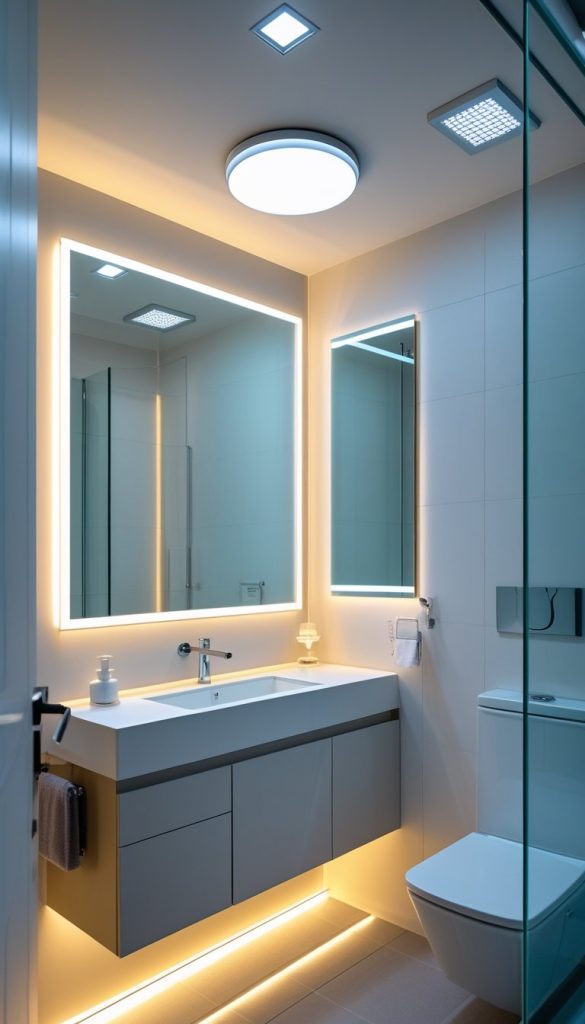
In a small bathroom, bulky fixtures can crowd the space. Compact and multi functional lighting solutions give you brightness without taking up valuable room. Flush mount or recessed ceiling lights provide general illumination without lowering the ceiling visually.
Vanity sconces or slim LED strips mounted beside or above the mirror reduce shadows on your face. For bathrooms without windows, these fixtures are essential for even, task oriented lighting. You can also install under-cabinet or toe kick LED strips to add a soft glow and improve safety at night.
Some modern fixtures combine multiple functions. For example, a mirror with built in LED lighting saves wall space while providing consistent brightness. Track lighting with adjustable heads lets you direct light to different areas, reducing the need for multiple separate fixtures.
Customizing Lighting for Personal Style
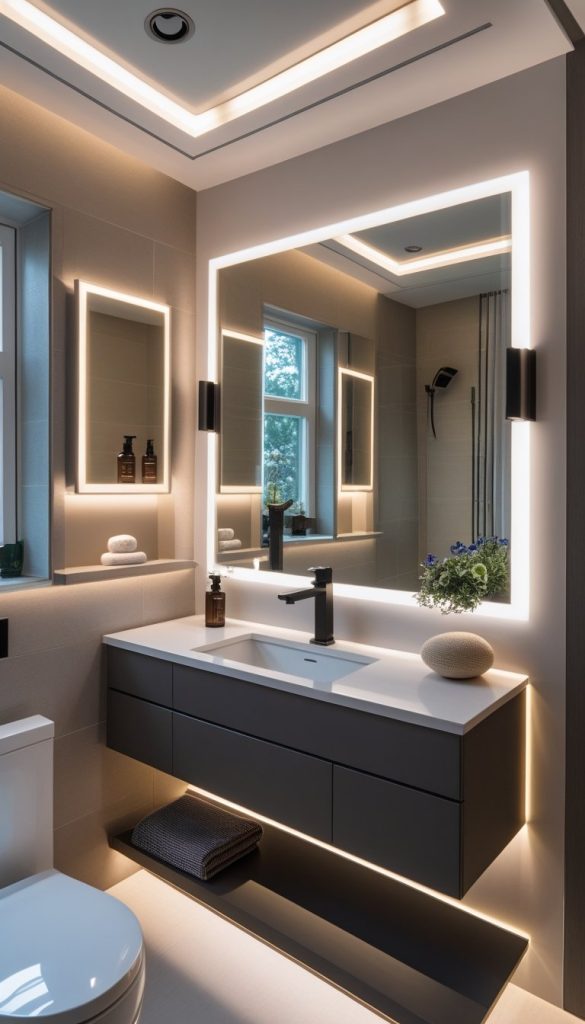
Lighting in a small bathroom should fit your needs and reflect your style. Customizable lighting, such as dimmer switches or color adjustable LEDs, lets you control brightness and warmth for different times of day. Bright white light works well in the morning, while softer tones are more comfortable at night.
You can also layer lighting to suit your preferences. Combine ambient, task, and accent lighting for a balanced setup. For example:
- Ambient: ceiling flush mount or recessed lights
- Task: vanity sconces or LED strips
- Accent: shelf or under vanity lighting
Fixture design also affects style. Modern fixtures with clean lines create a sleek look, while decorative sconces or pendant lights add character. By choosing finishes and shapes that match your taste, you create a bathroom that feels both practical and personal.
Advanced Options and Finishing Touches

Adding advanced lighting features can make your small bathroom feel brighter while also improving style. You can use natural light where possible and add decorative accents that bring character and warmth.
Integrating Skylights and Natural Light

If your bathroom has no windows, a skylight can be one of the most effective ways to bring in daylight. A roof mounted skylight provides overhead illumination that spreads evenly across the room. Tubular skylights are a good choice for bathrooms with limited roof space since they channel light through reflective tubes.
You should consider frosted or tinted glazing for privacy while still allowing sunlight. Venting skylights can also help reduce humidity, which is useful in bathrooms prone to moisture buildup.
Placement matters. A skylight directly above the shower brightens the wet area, while one centered above the vanity improves grooming visibility. Pairing skylights with mirrors enhances brightness by reflecting daylight into darker corners.
| Skylight Type | Best Use | Benefit |
|---|---|---|
| Fixed | General light | Simple, low-maintenance |
| Venting | Humid areas | Adds airflow + light |
| Tubular | Small bathrooms | Compact, cost-effective |
Candle Style and Decorative Lighting Accents

Candle style lights and decorative fixtures add softness that overhead lighting cannot provide. These lights work well as accent lighting, helping you create depth and balance in a small bathroom.
Wall-mounted candle style sconces on either side of the mirror can add symmetry while reducing harsh shadows. Choose designs with clear or frosted glass shades so the light spreads evenly.
You can also use decorative accent lighting in shelves, alcoves, or around a freestanding tub. Small LED candles or low wattage fixtures provide gentle illumination without overpowering task lighting.
For safety, avoid open flame candles. Instead, look for flameless LED candles that mimic natural candlelight. They create the same warm glow while being safe for enclosed, humid spaces.
Frequently Asked Questions

Lighting choices affect how bright, open, and comfortable your bathroom feels. The right mix of fixtures, placement, and colors helps you maximize limited space while keeping the room functional.
How can LED lights be utilized to enhance the ambiance of a small bathroom?
You can install LED strip lights under cabinets, along mirrors, or around shelves to create soft accent lighting. Recessed LED ceiling lights save space and provide even illumination. Choosing warm white LEDs makes the room feel cozy, while cooler tones work well for a clean, modern look.
What are effective vanity lighting solutions for small bathrooms?
Mount wall sconces on both sides of your mirror to reduce shadows on your face. Linear LED bars above the mirror give consistent coverage without taking up much space. Position lights at eye level or slightly higher to ensure balanced illumination during grooming tasks.
Which lighting techniques can make a small, windowless bathroom appear brighter?
Use multiple light sources instead of relying on one overhead fixture. Recessed ceiling lights combined with mirror lighting reduce shadows and brighten corners. Adding reflective surfaces, like a large mirror or glossy tiles, helps bounce light around and makes the room feel less enclosed.
What are the best modern lighting fixtures suitable for compact bathroom spaces?
Flush-mount ceiling lights work well in bathrooms with low ceilings. Semi-flush fixtures or slim track lighting fit standard ceiling heights while adding style. LED backlit mirrors are a modern option that combines function and design without requiring extra wall space.
How should one approach layered lighting in a small bathroom for optimal brightness?
Combine ambient, task, and accent lighting to cover different needs. Ambient lights, like recessed or ceiling fixtures, brighten the whole room. Task lights around mirrors improve visibility, while accent lighting under vanities or shelves adds depth and dimension.
What color schemes complement lighting to make a small bathroom feel more spacious?
Light colors reflect illumination better than dark tones. White, soft beige, or pale gray walls paired with chrome or glass fixtures help distribute light evenly. Glossy finishes on tiles or cabinets further enhance brightness and reduce the feeling of confinement.

