

20 Small Bathroom Ideas That Make Tiny Spaces Look Bigger
Small bathrooms don’t have to feel cramped or uncomfortable. Many homeowners face the challenge of making tiny bathrooms work better without major renovations or expensive changes.

The right design choices can make a small bathroom look and feel twice as big while adding more storage and style. Simple changes like installing a floating vanity, adding a large mirror, or using light paint colors can transform how a space looks. Wall-mounted toilets, glass shower doors, and vertical tile patterns also help create the illusion of more space.
Smart storage solutions and clever design tricks turn even the smallest bathrooms into functional spaces. From recessed storage niches to pocket doors that save floor space, these ideas help maximize every square inch while keeping the room looking clean and organized.
Key Takeaways
- Strategic fixture placement and smart layouts maximize functionality in tiny bathroom spaces
- Light colors, large mirrors, and glass elements create visual tricks that make rooms appear larger
- Built-in storage solutions and space-saving accessories keep small bathrooms organized without clutter
Space-Saving Small Bathroom Layouts and Fixtures

The right layout and fixtures can transform even the tiniest bathroom into a functional space. Strategic placement of compact fixtures like floating vanities and wall-mounted toilets creates the illusion of more floor space while maximizing storage options.
Choosing Space-Efficient Layouts

Small bathrooms require careful planning to fit all necessary fixtures without feeling cramped. A linear layout works best for narrow spaces, placing the toilet, vanity, and shower in a single row along one wall.
Corner layouts maximize space by tucking fixtures into corners. This approach works well in square bathrooms measuring 5×5 feet or smaller.
For powder rooms, designers recommend placing the sink on the longest wall. This creates better traffic flow and leaves room for storage.
Wet room designs eliminate the need for separate shower enclosures. The entire bathroom becomes the shower area, saving 2-3 square feet typically lost to shower doors or curtains.
Door placement affects the entire layout. Pocket doors save up to 9 square feet compared to standard swing doors that need clearance space.
Pros and Cons of Pedestal and Corner Sinks
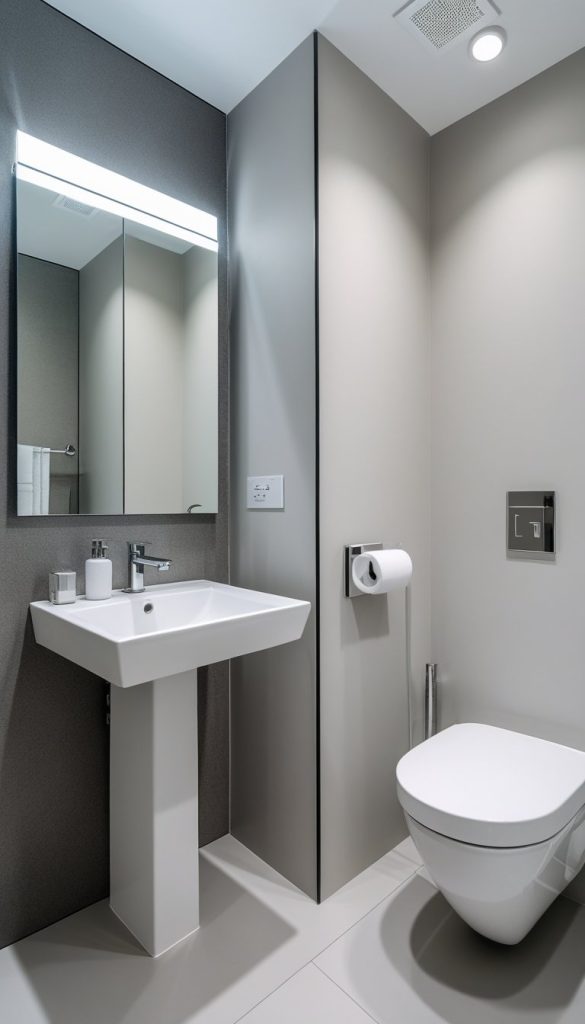
Pedestal sinks create visual openness by exposing floor space underneath. They work well in bathrooms smaller than 25 square feet where counter space isn’t essential.
However, pedestal sinks offer no storage. Users must find alternative storage solutions for toiletries and cleaning supplies.
Corner sinks fit into spaces as small as 12 inches wide. They free up wall space for other fixtures or storage cabinets.
The main drawback of corner sinks is their small basin size. They’re impractical for families but work well in powder rooms.
| Sink Type | Space Saved | Storage | Best For |
|---|---|---|---|
| Pedestal | High visual openness | None | Powder rooms |
| Corner | Maximizes wall space | Limited | Tiny bathrooms |
Benefits of Floating Vanities for Openness

Floating vanities mount to the wall without touching the floor. This design trick makes small bathrooms appear larger by showing continuous flooring underneath.
They typically hang 6-8 inches above the floor. This height allows for easy cleaning while maintaining the open feel.
Storage capacity remains strong with floating vanities. Most models include drawers and cabinet space similar to floor-mounted versions.
Installation requires solid wall backing. Floating vanities need proper support to hold the sink weight and daily use.
The exposed floor space underneath can accommodate storage baskets or a small stool. This flexibility adds function without visual clutter.
Wall-Mounted Faucets and Toilets for Streamlined Spaces

Wall-mounted faucets free up counter space around the sink basin. They create cleaner lines and make small vanities appear less crowded.
Installation costs run higher than standard faucets because they require plumbing inside the wall. However, they’re easier to clean around.
Wall-mounted toilets save 6-9 inches of floor space compared to standard models. The tank hides inside the wall, creating a sleek appearance.
These toilets can support up to 500 pounds when properly installed. The wall-hung design makes floor cleaning easier in tight spaces.
Maintenance requires access panels behind the toilet for repairs. This planning detail is crucial during the design phase.
Wall-mounted fixtures work best in new construction or major renovations where wall framing can accommodate the plumbing changes.
Design Tricks to Visually Expand Tiny Spaces

Smart design choices can trick the eye into seeing more space than actually exists. Strategic mirror placement, light paint colors, proper lighting, and vertical tile patterns work together to create the illusion of a larger bathroom.
Large Mirror Placement and Mirrored Walls

A large mirror serves as the most powerful tool for making small bathrooms appear bigger. Mirrors reflect light and create depth, doubling the visual space instantly.
Placement matters most. The mirror should sit directly across from the bathroom entrance. This position creates the strongest impact when someone first walks in.
Wall-to-wall mirrors work even better than single large mirrors. Mirrored walls eliminate visual boundaries and make the room feel endless.
Consider placing mirrors on two opposite walls. This creates an infinity effect that makes the space feel much wider than it really is.
Avoid small mirrors. Tiny mirrors actually make spaces look smaller. Choose mirrors that are at least 24 inches wide for noticeable impact.
Mirrored medicine cabinets combine storage with space expansion. They provide the benefits of a large mirror while hiding toiletries and medications.
Light Paint Colors With High LRV

Light colors reflect more light than dark colors, making rooms feel open and airy. Paint colors with high Light Reflectance Values (LRV) work best for small bathrooms.
Choose colors with LRV ratings above 70. Pure white has an LRV of 100, while soft grays and beiges typically range from 70-85.
Popular high-LRV colors include Cloud White, Chantilly Lace, and Classic Gray. These colors bounce light around the room effectively.
Paint the ceiling the same color as the walls. This technique erases visual boundaries between surfaces. The room appears taller and more spacious.
Light colors make surfaces recede visually. Dark colors do the opposite and make walls feel closer.
Consider using semi-gloss or satin finishes instead of flat paint. These finishes reflect more light and are easier to clean in humid bathroom environments.
Maximizing Natural and Artificial Light

Bright spaces always feel larger than dark ones. Both natural light and artificial lighting play important roles in expanding visual space.
Remove heavy window treatments. Skylights and windows should stay uncovered when possible. Natural light creates the most realistic sense of space.
Install multiple light sources instead of one overhead fixture. Layer ambient, task, and accent lighting throughout the bathroom.
LED recessed lights work best for small bathrooms. They provide even light distribution without taking up visual space like hanging fixtures do.
Place lights near mirrors to eliminate shadows. Side-mounted sconces or backlit mirrors create the most flattering and space-expanding illumination.
Consider adding under-cabinet lighting or toe-kick lights. These create a floating effect that makes fixtures appear weightless.
Vertical Tile Stack and Diagonal Patterns

Tile patterns significantly impact how large or small a bathroom appears. Vertical arrangements and diagonal layouts create different visual effects.
Vertical tile stack makes ceilings look higher. Install rectangular tiles in straight vertical columns rather than traditional brick patterns.
Large format tiles reduce grout lines and create cleaner surfaces. Fewer visual interruptions make the space feel more open.
Diagonal patterns expand floor space. Installing floor tiles at a 45-degree angle makes the room appear wider and longer.
Patterned floors should use light colors and subtle designs. Bold patterns can overwhelm small spaces and make them feel cramped.
Run tiles from floor to ceiling on shower walls. This uninterrupted line draws the eye upward and emphasizes height.
Clever Storage and Organizational Solutions

Smart storage solutions can double your bathroom’s usable space without adding square footage. The right combination of recessed storage, floating fixtures, vertical shelving, and space-saving doors creates maximum function while maintaining a clean, open feel.
Recessed Niches and Medicine Cabinets

Recessed storage fits directly into wall cavities to save precious floor space. A shower niche built between wall studs provides storage without taking up room inside the shower area.
Medicine cabinets offer hidden storage behind mirrors. They eliminate counter clutter while keeping daily items within easy reach.
Optimal Placement Guidelines:
- Shower niches: 48-54 inches from floor
- Medicine cabinets: 5-6 feet from floor
- Soap niches: 36-42 inches from floor
Wall-mounted medicine cabinets with sliding doors work better than hinged versions in tight spaces. They won’t hit users or other fixtures when opened.
Multiple small niches work better than one large opening. This approach maintains wall strength while creating dedicated spots for different items.
Floating and Acrylic Shelves

Floating shelves create storage without visual weight. They mount directly to walls using hidden brackets that keep the clean lines intact.
Acrylic shelves practically disappear in small bathrooms. The clear material doesn’t block light or create visual barriers like solid shelving.
Corner floating shelves use dead space effectively. They fit into tight spots where traditional storage won’t work.
Best Materials for Small Bathrooms:
- Glass: Reflects light and feels spacious
- Acrylic: Nearly invisible appearance
- White wood: Blends with light walls
- Metal: Thin profiles save space
Install floating shelves at different heights for visual interest. Stagger them to create more storage without overwhelming the space.
Ladder and Over-the-Toilet Shelving

Ladder shelves lean against walls without permanent installation. They provide multiple levels of storage in a narrow footprint.
Over-the-toilet shelving uses vertical space above the tank. This area often goes unused but can hold towels, supplies, and decorative items.
Narrow ladder shelves work perfectly in tight corners. They typically measure 12-18 inches wide, fitting into spaces too small for traditional furniture.
Ladder Shelf Benefits:
- No wall mounting required
- Easy to move or remove
- Multiple storage levels
- Minimal floor space needed
Choose ladder shelves with wider bases for stability. The bottom shelf should be at least 2 inches wider than the top for proper balance.
Pocket Doors and Sliding Solutions

Pocket doors slide into wall cavities instead of swinging open. They eliminate the space needed for door clearance, freeing up valuable floor area.
Barn-style sliding doors work when pocket installation isn’t possible. They slide along wall-mounted tracks without requiring wall modifications.
Sliding cabinet doors save space inside vanities and storage areas. They provide full access to contents without door swing interference.
Space Savings Comparison:
- Standard 24-inch door: Requires 24-inch clearance arc
- Pocket door: Requires zero floor clearance
- Sliding door: Uses 2-3 inches of wall space
Medicine cabinets with sliding doors prevent collisions in narrow bathrooms. Users won’t hit their heads or shoulders on open doors while using the sink.
Finishing Touches and Style Elevators

The right finishing touches can transform a cramped bathroom into a spacious retreat. Smart shower solutions, strategic wall treatments, and carefully chosen decor create visual flow while maximizing every inch.
Glass Shower Doors and Walk-In Showers

Glass shower doors eliminate visual barriers that make small bathrooms feel closed in. Clear glass allows light to flow freely throughout the space.
Frameless glass doors create the cleanest look. They have minimal hardware and uninterrupted sight lines. Semi-frameless options cost less while still opening up the room.
Walk-in showers work well in narrow bathrooms. They remove the bulk of a bathtub and create more floor space. A curbless design makes the room feel even larger.
Key glass door benefits:
- Reflects light around the room
- Makes shower area appear larger
- Easy to clean and maintain
- Works with any tile design
Frosted glass on the bottom third adds privacy while keeping the space open. This works well for bathrooms facing windows or other rooms.
Accent Walls and Gallery Walls

An accent wall draws the eye to one focal point instead of the room’s small size. The best spot is usually behind the vanity or toilet.
Bold wallpaper works well on accent walls. Vertical patterns make ceilings look higher. Horizontal patterns make narrow walls appear wider.
Gallery walls showcase personality without taking up floor space. They work best on the largest available wall. Keep frames the same color for a clean look.
Gallery wall tips:
- Use odd numbers of pieces
- Mix different sized frames
- Keep 2-3 inches between frames
- Choose light-colored mats
Dark accent colors can work if the room gets plenty of natural light. Lighter colors reflect more light and make spaces feel bigger.
Minimalist Decor for Small Spaces

Less clutter makes small bathrooms feel more spacious. Each decorative item should serve a purpose or bring real joy.
Choose multi-functional pieces. A decorative tray holds toiletries while adding style. Pretty storage baskets hide supplies and look good doing it.
Stick to 2-3 colors maximum. Too many colors make small spaces feel busy and cramped. White, beige, and one accent color work well together.
Smart minimalist choices:
- One large plant instead of several small ones
- Built-in soap dispensers instead of bottles
- Hidden storage for daily items
- Quality towels in matching colors
Negative space is just as important as the items you choose. Empty wall space and clear counters make rooms breathe and feel larger than they are.
Frequently Asked Questions

These common questions address specific design elements and techniques that create the illusion of more space. The answers focus on practical solutions like strategic fixture placement, color choices, and storage methods.
What are some effective space-saving bathroom designs for very small spaces?

Corner sinks maximize floor space by utilizing often-unused angles. Wall-mounted fixtures free up visual floor area and create a floating effect.
Vertical storage solutions work better than horizontal ones. Install shelves above the toilet or use tall, narrow cabinets.
Pocket doors eliminate the swing space needed for traditional doors. This design choice can add up to 9 square feet of usable space.
How can a floating vanity and wall-mounted toilet impact the perceived space in a tiny bathroom?

Floating vanities create visible floor space underneath the cabinet. This continuous floor line makes the room appear larger than it actually is.
Wall-mounted toilets eliminate the bulky base found on traditional models. The clean lines and exposed floor create an open feeling.
Both fixtures make cleaning easier since there are no hard-to-reach areas behind or under them. The streamlined look reduces visual clutter.
In what ways can the installation of a large mirror contribute to making a small bathroom look bigger?

Large mirrors reflect light and double the visual space of a room. A mirror that spans the entire width of a vanity wall creates maximum impact.
Mirrors placed opposite windows bounce natural light around the space. This technique brightens dark corners and eliminates shadows.
Frameless mirrors work better than framed ones in tight spaces. The uninterrupted reflection creates a seamless, expanded view.
What light paint colors have a high Light Reflectance Value (LRV) suitable for expanding the visual space of a narrow bathroom?

Pure white has an LRV of 85-95 and reflects the most light possible. Off-white shades like Swiss Coffee or Alabaster have LRVs around 85.
Light gray colors with LRVs above 70 work well for those wanting subtle color. Classic Gray and Agreeable Gray are popular choices.
Soft blues and greens with LRVs of 70+ can make spaces feel larger. These colors create depth while maintaining brightness.
How does the choice of a glass shower door over a traditional shower curtain affect the openness of a bathroom design?

Glass doors allow the eye to see through the entire bathroom space. Shower curtains block the view and make the room feel chopped up.
Clear glass reflects light better than opaque curtains. This reflection adds brightness and creates the illusion of more space.
Frameless glass doors provide the cleanest look. They eliminate visual barriers while containing water effectively.
Can the implementation of recessed storage and a pocket door maximize the functionality of a small bathroom?

Recessed storage built into walls provides storage without taking up floor space. Medicine cabinets and shower niches are common examples.
These built-in solutions keep toiletries organized without cluttering countertops. Clean surfaces make small spaces appear larger.
Pocket doors slide into wall cavities instead of swinging open. This design saves space and allows for better furniture placement near the entrance.
