

Best Colors for Small Bathrooms to Make Them Look Spacious: Expert Design Tips for Maximum Visual Impact
Small bathrooms present a common challenge for homeowners who want their space to feel open and inviting rather than cramped and confined. The limited square footage in these rooms often creates a sense of claustiness that can make daily routines feel uncomfortable.
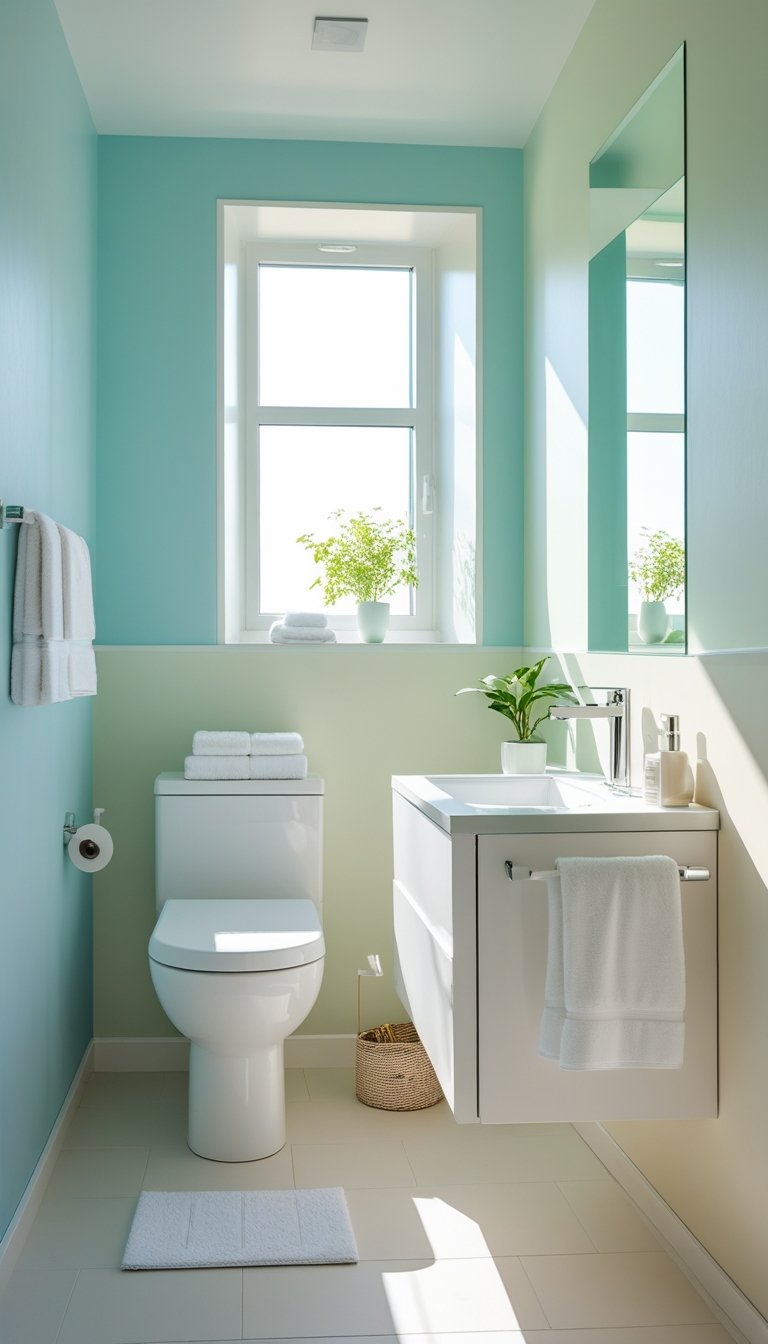
The right paint color can transform a small bathroom by making it appear significantly larger and more spacious than its actual dimensions. Light and neutral colors work particularly well in compact spaces because they reflect more light and create visual openness. Colors like soft whites, pale blues, and light grays offer excellent starting points for creating an airy atmosphere, while strategic color pairings can further enhance the sense of space without sacrificing style.
1) Soft White

Soft white paint creates the perfect base for small bathrooms. This classic color reflects light better than most other shades. The reflection makes spaces feel bigger and brighter.
Soft white works well because it opens up tight spaces. It bounces natural light around the room. This creates an airy feeling that many homeowners want.
This color pairs easily with any decor style. White fixtures blend seamlessly with soft white walls. Chrome, brass, and black accents all look great against this backdrop.
Soft white paint comes in many different undertones. Some lean toward cream or beige. Others have gray or blue hints. Choosing the right undertone depends on the bathroom’s lighting.
Cool undertones work best in bathrooms with lots of natural light. Warm undertones help spaces that lack windows or have dim lighting. The right choice prevents the room from feeling cold or sterile.
Soft white makes cleaning easier too. It shows dirt and stains clearly. This helps homeowners keep their bathrooms fresh and spotless.
2) Pale Blue
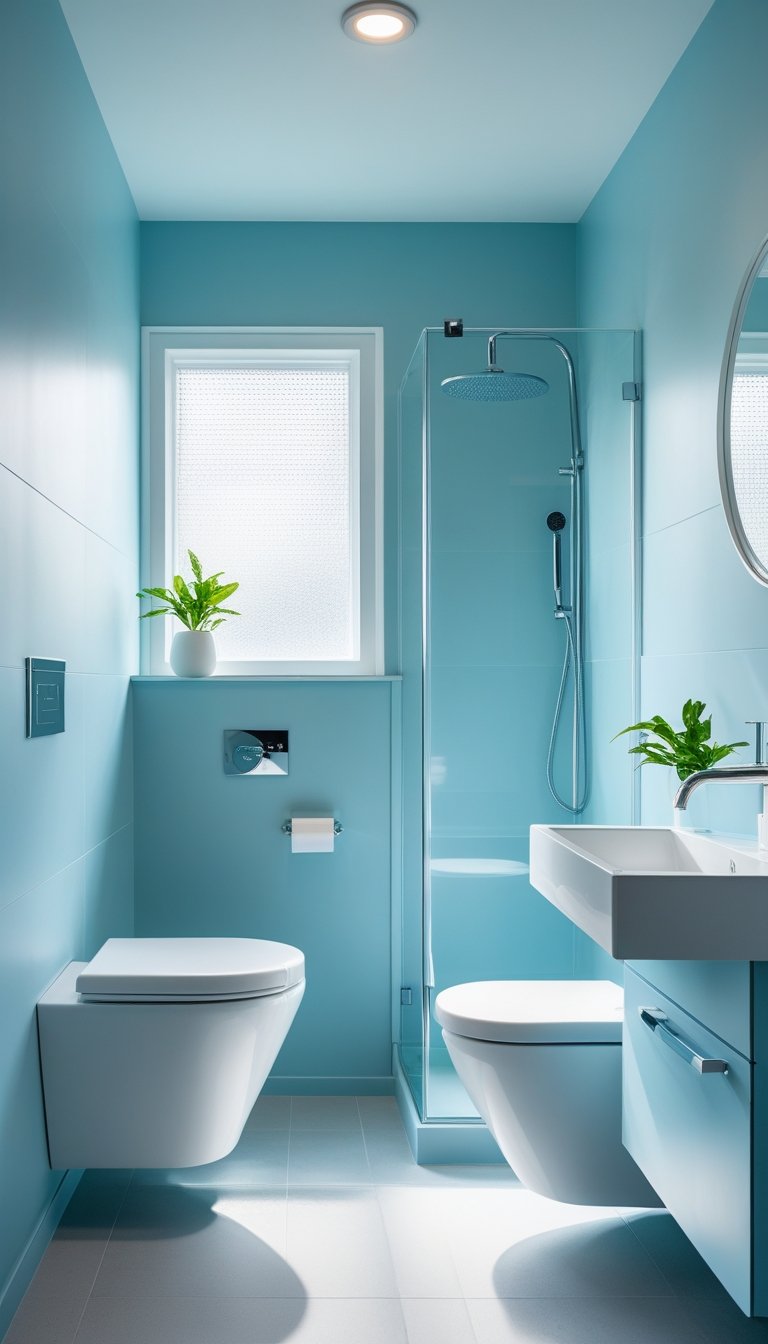
Pale blue creates a calming atmosphere in small bathrooms. This soft color reflects light well, making tight spaces feel more open and airy.
The light tone tricks the eye into seeing a bigger room. It works by bouncing natural and artificial light around the space. This creates the illusion of expanded walls and higher ceilings.
Pale blue pairs perfectly with white fixtures and trim. The combination feels fresh and clean without being stark. This color scheme works well in bathrooms with limited natural light.
Homeowners can use pale blue on all walls or as an accent color. It looks great with white subway tiles or neutral flooring. The color also complements chrome and brushed nickel fixtures.
This shade works in both modern and traditional bathroom designs. It feels timeless without going out of style quickly. Pale blue also hides minor imperfections better than pure white walls.
The color promotes relaxation during daily routines. It creates a spa-like feeling even in cramped quarters. Many people find pale blue soothing after long days.
For best results, choose pale blue with gray undertones rather than green undertones. The gray base keeps the color from feeling too cool or sterile in small spaces.
3) Light Gray

Light gray works well in small bathrooms because it creates a calm feeling without being too dark. This color reflects light better than darker grays while still adding some depth to the walls.
Gray pairs nicely with many other colors. It looks good with white fixtures, black accents, or green towels. This makes it easy to change decorating styles later.
Light gray works best in bathrooms that get natural light. The sunlight helps keep the color from looking too cool or dull.
This color brings a sense of sophistication to small spaces. It feels more interesting than plain white but still keeps the room feeling open.
When choosing light gray paint, pick colors that lean slightly warm. These work better than cool grays in small rooms. Test the color in different lighting before painting the whole room.
Light gray also hides small imperfections on walls better than bright white paint. This can be helpful in older bathrooms where the walls might not be perfect.
The color creates a neutral backdrop that lets other bathroom features stand out. Colorful towels, artwork, or plants will pop against light gray walls.
4) Mint Green

Mint green creates a fresh and calming look in small bathrooms. This soft color helps make tiny spaces feel larger and more open.
The light tone reflects natural light well. This makes the room appear brighter and more spacious than it actually is.
Mint green works best when paired with white fixtures and trim. The combination creates a clean, timeless look that never goes out of style.
This color promotes a spa-like feeling in the bathroom. It brings a sense of relaxation without being too bold or overwhelming.
Mint green can be used on all walls or as an accent wall. A single mint green wall adds color without making the space feel closed in.
The color pairs well with white towels and accessories. Light fixtures and shower curtains in white help balance the cool mint tone.
This shade works in both modern and vintage-style bathrooms. It creates a soft background that lets other design elements stand out.
Mint green is especially good for bathrooms with limited natural light. The color helps brighten dark spaces and makes them feel more welcoming.
5) Warm Beige
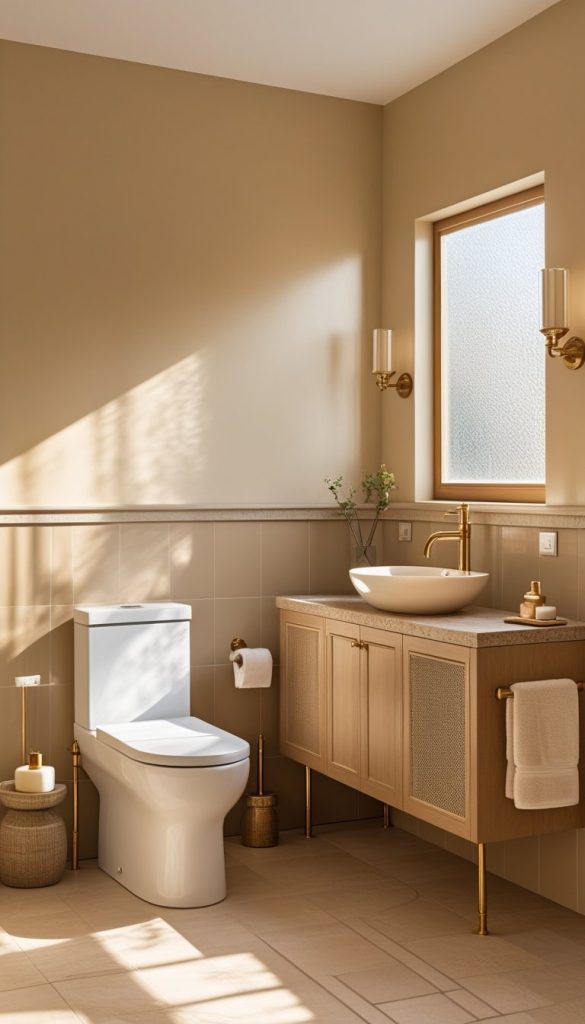
Warm beige creates a soft and calming atmosphere in small bathrooms. This neutral color reflects light gently, making the space feel larger and more open.
Beige walls provide an excellent backdrop for both light and dark accents. The color works well with white fixtures and natural materials like wood or stone.
This versatile shade allows homeowners to mix different textures without creating visual clutter. Beige tiles, paint, or vanities all contribute to a spacious feeling.
The warmth of beige makes small bathrooms feel cozy rather than cramped. It softens harsh lighting and creates a welcoming environment.
Beige pairs beautifully with chrome, brass, or bronze fixtures. These combinations enhance the sense of space while maintaining visual interest.
Natural light works especially well with beige tones. The color absorbs and reflects light in a way that maximizes brightness in compact areas.
Homeowners can layer different shades of beige for depth without overwhelming the space. Lighter beiges on walls with darker beige accents create dimension while preserving the open feel.
This timeless color choice ensures the bathroom remains stylish for years. Beige provides flexibility for future decorating changes without requiring a complete renovation.
6) Powder Pink

Powder pink creates a soft and gentle atmosphere in small bathrooms. This light shade reflects natural light well, helping the space feel more open and airy.
The pale tone works especially well in bathrooms with limited natural light. It adds warmth without making the room feel closed in or dark.
Powder pink pairs beautifully with white fixtures and trim. This combination creates a clean, fresh look that maximizes the visual space in the room.
The color works well on all four walls or as an accent wall. When used on all walls, it creates a cohesive look that flows smoothly throughout the space.
Powder pink complements both modern and traditional bathroom styles. It works with chrome, brass, or white fixtures equally well.
This shade is less bold than bright pink but still adds personality to the space. It creates a calming environment while maintaining visual interest.
The color photographs well in both natural and artificial light. This makes the bathroom appear larger in photos and mirrors throughout the day.
Powder pink creates a timeless look that won’t feel outdated quickly. It offers a subtle pop of color without overwhelming a small space.
7) Sky Blue
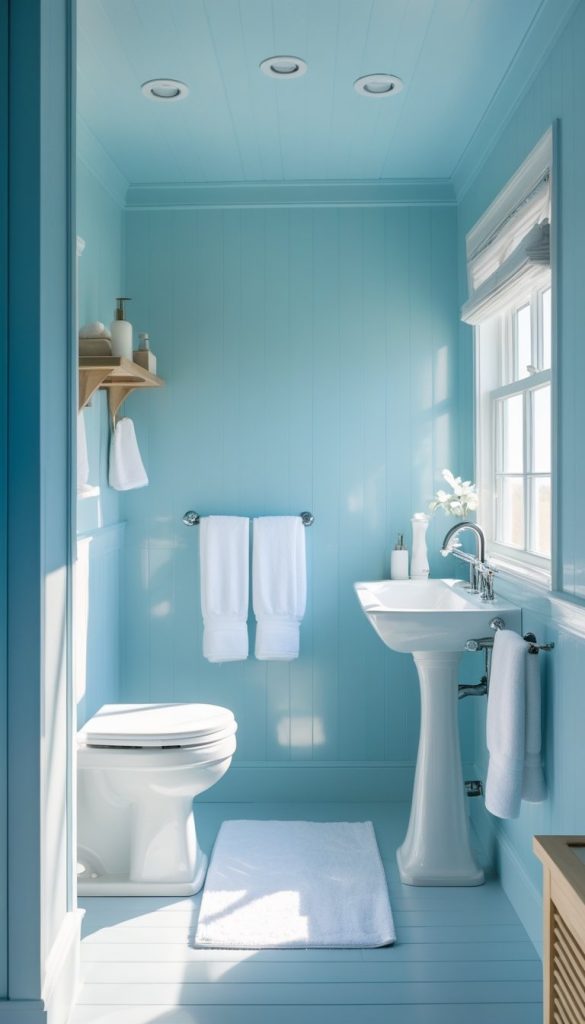
Sky blue creates a calm and open feeling in small bathrooms. This soft color reflects light well and makes walls appear to recede.
The light tone tricks the eye into seeing more space. Sky blue works especially well in bathrooms with limited natural light.
This color pairs perfectly with white fixtures and trim. The combination creates a fresh, clean look that feels airy and spacious.
Sky blue brings a sense of tranquility to the bathroom space. It evokes feelings of open skies and creates a peaceful atmosphere.
For the best results, choose lighter shades of sky blue rather than darker versions. Pale sky blue shades work better for making small spaces feel larger.
This color coordinates well with white towels and accessories. Light wood accents also complement sky blue walls nicely.
Sky blue is a timeless choice that works with many design styles. It creates an inviting space without overwhelming the room.
The color reflects both natural and artificial light effectively. This helps brighten the entire bathroom and makes it feel more open.
8) Creamy Off-White

Creamy off-white creates a warm and inviting feeling in small bathrooms. This color choice adds softness without being too stark or cold like pure white.
The cream undertones provide just enough warmth to make the space feel cozy. At the same time, the light color reflects natural and artificial light well.
This color works best when homeowners want something warmer than pure white. Creamy off-white has minimal yellow undertones while still maintaining its warm character.
The neutral nature of this shade means it pairs well with most fixtures and hardware. Chrome, brushed nickel, and brass all complement creamy off-white walls.
Small bathrooms benefit from this color because it opens up the space visually. The light tone makes walls appear to recede, creating the illusion of more room.
Creamy off-white also provides a timeless backdrop that won’t look dated in a few years. This makes it a smart choice for homeowners who don’t want to repaint frequently.
The color works in both contemporary and traditional bathroom styles. It adapts well to different design preferences and décor choices.
9) Pastel Lavender

Pastel lavender creates a calm and peaceful feeling in small bathrooms. This soft purple shade helps make tiny spaces feel bigger and more open.
Light lavender reflects light well. This makes the room appear brighter and more spacious than darker colors would.
The color works with many design styles. It looks good with both modern and traditional bathroom decor.
Pastel lavender pairs well with neutral colors. White, gray, and beige all work nicely with this soft purple tone.
Small bathrooms benefit from lavender’s airy quality. The light shade doesn’t make the space feel heavy or closed in like bold colors might.
This color creates a spa-like feel. Many people find purple tones relaxing and soothing.
Lavender can be used on walls, tiles, or accessories. Even small touches of this color can help brighten the space.
The soft hue makes bathrooms feel clean and fresh. It gives off a gentle, welcoming vibe that many homeowners enjoy.
10) Cool Taupe

Cool taupe stands out as one of the best color choices for small bathrooms. This neutral shade combines gray and brown tones to create a sophisticated look.
The color works well because it reflects light without being too bright. Cool taupe walls make small spaces feel larger and more open.
This versatile color pairs easily with white fixtures and trim. The combination creates clean lines that help expand the visual space.
Cool taupe works with both warm and cool accent colors. Homeowners can add colorful towels, rugs, or artwork to change the bathroom’s style easily.
The color looks modern when paired with light gray floors. This combination creates a fresh, calming environment that feels spacious.
Cool taupe tiles offer another way to use this color effectively. The neutral tone works on walls, floors, or as accent pieces.
This color choice stays timeless unlike trendy colors that quickly look dated. Cool taupe provides a solid foundation that works with different decorating styles.
The shade works especially well in bathrooms with limited natural light. It brightens the space without feeling stark or cold like pure white can.
How Color Influences Perception of Space

Color acts as a visual cue that tricks the brain into seeing space differently. Light colors reflect more light and push walls away, while dark colors absorb light and pull surfaces closer.
Light Reflectance and Spatial Illusion

Light colors bounce more light around a room than dark colors. This creates the illusion of larger space because the eye can see more of the room clearly.
White reflects up to 90% of light that hits it. Pale blues and soft greens reflect about 70-80% of light. These high-reflection colors make walls appear to recede.
Dark colors like navy or black absorb most light. They reflect only 5-15% of light back into the room. This makes surfaces look closer and the space feel smaller.
The brain interprets bright, well-lit spaces as bigger. When light bounces off pale walls and ceilings, it fills shadows and dark corners. This eliminates visual boundaries that make rooms feel cramped.
Key light-reflecting colors for small bathrooms:
- Pure white
- Soft gray
- Pale blue
- Light green
- Cream
- Beige
Visual Flow and Color Continuity
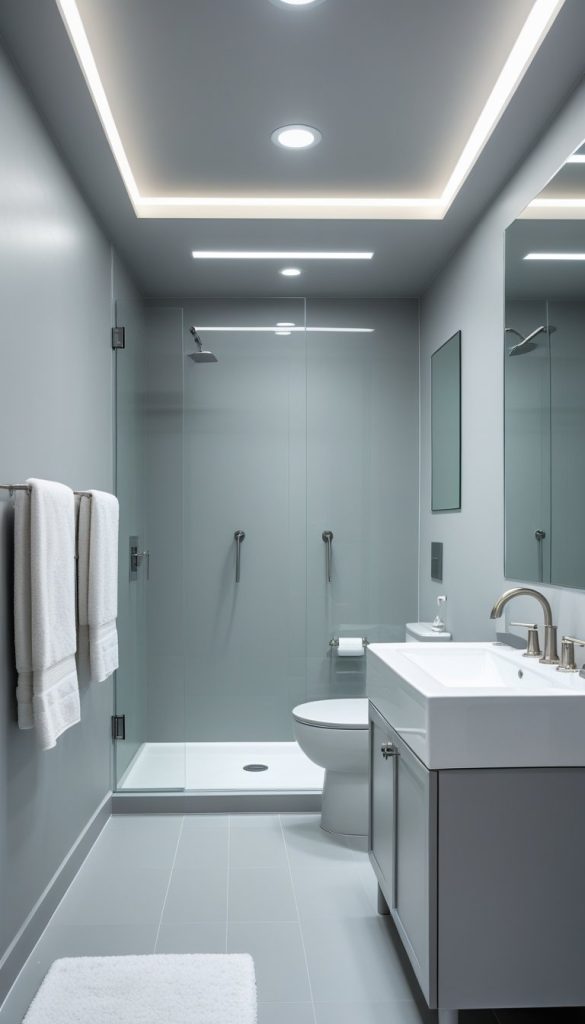
Using the same color or similar shades throughout a bathroom creates unbroken visual lines. The eye moves smoothly from surface to surface without stopping at color changes.
Monochromatic color schemes work best for small spaces. This means using different shades of the same color family. Light gray walls with white trim and pale gray tiles create seamless flow.
Bold color contrasts break up visual space. A white wall next to a dark vanity creates a hard stop for the eye. This divides the room into smaller sections.
Painting the ceiling the same color as walls eliminates the visual break between vertical and horizontal surfaces. The room appears taller and more open.
Colors that maintain visual flow:
- Wall and ceiling in matching light tones
- Tile colors within two shades of wall color
- Trim and fixtures in similar neutral tones
Effective Color Pairings for Small Bathrooms
Smart color combinations work better than single colors to create the illusion of space. Matching similar shades creates smooth flow, while adding small amounts of contrast brings visual interest without making the room feel cramped.
Monochromatic Schemes for Cohesion
Monochromatic color schemes use different shades of the same color family. This approach creates a seamless look that makes walls seem to disappear.
Light Gray Monochromatic:
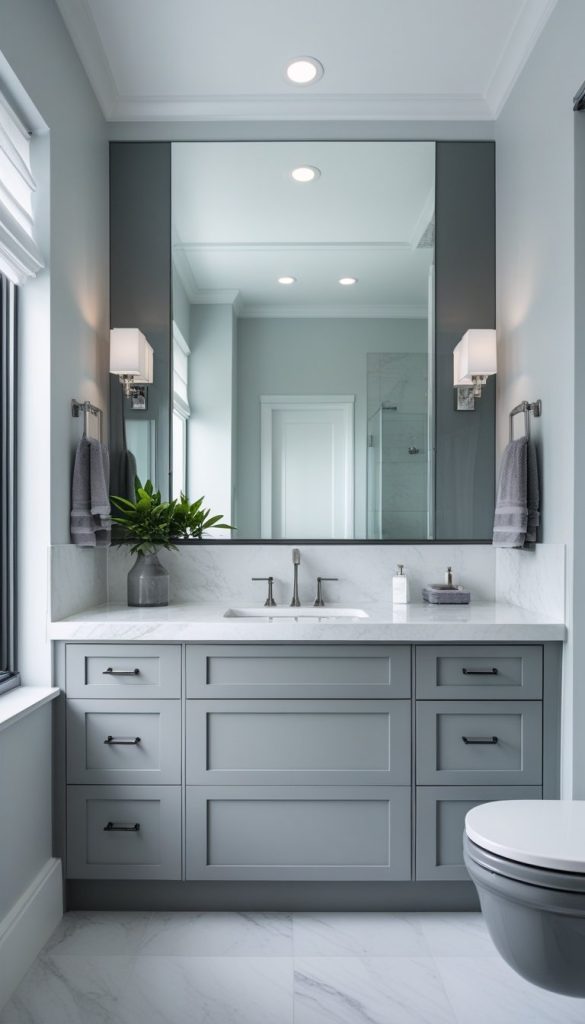
- Pale gray walls
- Medium gray vanity
- White-gray marble countertops
- Charcoal gray accents
This combination works well because the eye moves smoothly across surfaces. There are no harsh breaks in color that cut up the space visually.
Blue Monochromatic:

- Soft powder blue walls
- Navy blue towels
- Light blue shower curtain
- White fixtures with blue undertones
Blue schemes feel calm and airy. The lighter blues reflect more light while darker blues add depth without overwhelming the space.
Beige and Cream:
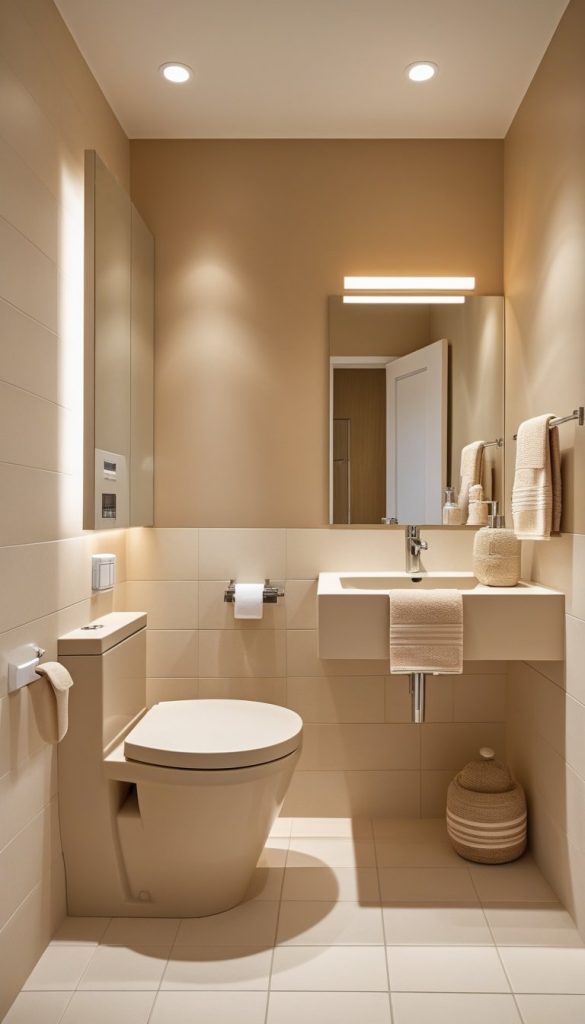
- Warm beige walls
- Cream colored tiles
- Light tan accessories
- Off-white fixtures
Neutral monochromatic schemes make small bathrooms feel larger. They also work with any lighting type, from warm to cool bulbs.
Subtle Contrasts to Add Depth
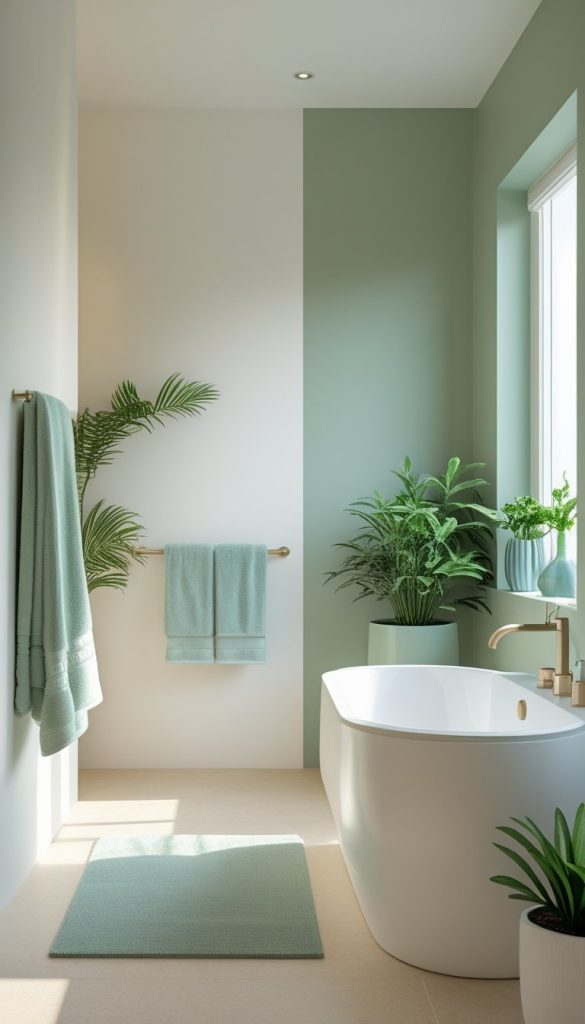
Small amounts of contrast prevent monochromatic schemes from looking flat. The key is choosing colors that complement each other without fighting for attention.
White and Soft Green: White walls paired with sage green accents create freshness. Use green in small doses through towels, plants, or a single accent wall. This combination feels natural and opens up the space.
Cream and Light Blue: Warm cream walls with pale blue accessories balance cool and warm tones. The contrast is gentle enough to maintain unity while adding visual interest.
Key Contrast Guidelines:
- Keep the ratio at 70% main color, 30% accent color
- Use darker colors in small amounts only
- Choose colors that are 2-3 shades apart on paint strips
- Test combinations in different lighting conditions
Light colors should dominate the space. Darker accent colors work best on accessories that can be easily changed, like towels or artwork.
Frequently Asked Questions
Paint color choices significantly impact how spacious a small bathroom appears, with light neutrals and cool tones creating the most effective visual expansion. The right painting techniques and brand-specific colors can transform even windowless spaces into areas that feel open and airy.
What are the ideal paint colors for small bathrooms to create the illusion of more space?
Light neutrals work best for making small bathrooms appear larger. Soft white reflects the most light and creates an open feeling.
Pale blue adds a calming effect while maintaining spaciousness. This cool tone helps walls appear to recede.
Light gray provides a modern look without making the space feel cramped. It works well with both warm and cool lighting.
Mint green offers a fresh appearance while keeping the room feeling open. This soft color adds interest without overwhelming the space.
Warm beige creates a cozy yet spacious feeling. It works particularly well in bathrooms with warm lighting fixtures.
How do paint colors affect the perception of space in a small bathroom with limited lighting?
Light colors reflect available light better than dark colors. This reflection makes the room appear brighter and more open.
Cool tones like pale blue and mint green help walls appear farther away. They create depth even in poorly lit spaces.
Warm colors like beige can make a room feel cozy but may appear smaller in low light. Light shades of warm colors work better than deep ones.
Glossy or semi-gloss finishes reflect more light than flat paint. This extra reflection helps brighten dark bathrooms.
Which paint colors from major brands like Sherwin-Williams or Benjamin Moore are recommended for expanding the visual size of a small bathroom?
Benjamin Moore’s Cloud White is a popular soft white choice. It provides clean brightness without feeling stark.
Sherwin-Williams’ Sea Salt offers a pale blue-green tone. This color creates depth while maintaining lightness.
Benjamin Moore’s Pale Oak gives a warm beige option. It adds warmth without making the space feel smaller.
Sherwin-Williams’ Misty offers a light gray solution. This neutral works well with various decor styles.
Benjamin Moore’s Healing Aloe provides a soft mint green. It adds subtle color while keeping the space feeling open.
What painting techniques can be applied to make a small bathroom appear larger?
Paint the ceiling the same light color as the walls. This technique eliminates visual breaks and makes the room feel taller.
Use a slightly darker shade on one accent wall. This creates depth without overwhelming the small space.
Paint trim and doors in the same color as walls. This approach reduces visual clutter and creates seamless flow.
Apply paint in vertical strokes on walls. This technique can make ceilings appear higher than they are.
Can the choice of paint color impact the feeling of spaciousness in a windowless bathroom?
Light paint colors become even more important in windowless bathrooms. They maximize the effect of artificial lighting.
Cool tones work particularly well without natural light. They prevent the space from feeling closed in.
Glossy finishes help bounce artificial light around the room. This creates more brightness than flat finishes.
Avoid dark colors completely in windowless spaces. They absorb light and make the room feel much smaller.
What are some before and after tips for painting a small bathroom to enhance its size perception?
Clean and prime all surfaces before painting. This ensures the new color appears true and bright.
Remove or minimize decorative elements before painting. This allows the new color to have maximum visual impact.
Choose one light color for walls and ceiling. This creates the most dramatic size-enhancing effect.
Add proper lighting after painting light colors. Good lighting maximizes the spacious feeling the paint creates.
Test paint colors in different lighting conditions first. Colors can look different under various light sources.
