
Narrow Bathroom Ideas: Space Smart Designs, Layouts & Storage
Designing a narrow bathroom can feel tricky, but the right choices can make it just as functional and comfortable as a larger space. You can transform a long or compact layout into an efficient, stylish room by focusing on smart layouts, compact fixtures, and storage solutions that maximize every inch.

Instead of fighting the linear shape, you can use it to your advantage. A galley style layout, floating vanity, or walk in shower at the end of the room creates flow without clutter. Choosing slim sinks, wall mounted toilets, and built in storage keeps the space open while still meeting daily needs.
Small details like mirrors, vertical lighting, and consistent tile can make the bathroom feel brighter and more spacious. With a few practical design moves, your narrow bathroom can work better and look better without requiring a full remodel.
Key Takeaways
- Narrow bathrooms can feel functional with smart layouts
- Compact fixtures and built in storage save space
- Simple design details improve light and flow
Fundamentals of Narrow Bathroom Design

Designing a narrow bathroom requires careful planning of layout, circulation, and finishes. The goal is to use every inch effectively while keeping the space bright, functional, and comfortable.
Understanding Linear Layouts

A narrow bathroom often works best with a linear layout, where fixtures align along one or both walls. This approach reduces wasted space and keeps circulation clear.
For example, placing the sink and toilet on the same wall allows you to reserve the opposite wall for a shower or tub. In longer layouts, a galley style design with fixtures on both sides can work, but only if you maintain enough clearance in the center walkway.
You should also consider fixture size. Compact sinks, wall-mounted toilets, and slim vanities reduce bulk. Floating vanities create more visible floor area, which makes the bathroom feel wider.
When choosing a linear layout, measure carefully to avoid crowding. A narrow bathroom design benefits from consistent spacing between fixtures, ensuring you can move easily without bumping into corners.
Optimizing Circulation and Flow

Circulation in a narrow bathroom depends on clear pathways. You should avoid layouts that force you to walk around obstacles or squeeze between fixtures.
A simple rule is to keep at least 30 inches of clearance in front of toilets and sinks. For showers, glass partitions or walk in designs work better than bulky curtains or framed doors because they preserve openness.
If your bathroom is especially long, consider placing the shower at the far end. This creates a natural sequence from sink to toilet to shower, which improves flow. In smaller powder rooms, a corner sink can free up space and make movement easier.
Storage should not block circulation. Use vertical shelving, recessed niches, or wall cabinets instead of deep floor cabinets that narrow the walkway.
Choosing Light Colors and Finishes

Color and finish choices strongly affect how a narrow bathroom feels. Light colors such as white, beige, or pale gray reflect more light and make walls seem farther apart.
Glossy tile or glass surfaces also help bounce light around. Running tile vertically to the ceiling draws the eye upward, giving the impression of a taller space.
Mirrors are especially useful in narrow bathroom design. A large mirror above the vanity doubles the sense of depth and enhances natural light. You can also place mirrors opposite windows to maximize brightness.
For finishes, stick to a consistent palette. Too many contrasting materials can make a tight bathroom feel cluttered. Instead, use subtle textures like matte tiles or light wood paneling to add interest without overwhelming the space.
Best Narrow Bathroom Layouts That Work

Designing a narrow bathroom requires layouts that balance flow, storage, and comfort. The most effective options use the length of the room, compact fixtures, and clear sightlines to prevent the space from feeling cramped.
Single Wall and Galley Arrangements

A single wall layout places all fixtures sink, toilet, and shower along one side. This keeps the opposite wall open, making movement easier. It works well in spaces as slim as 3 to 4 feet wide.
A galley bathroom design uses both long walls. For example, you might install a vanity and storage along one side, with a shower or tub opposite. This layout feels balanced but requires at least 5 feet of width to avoid crowding.
To maximize efficiency, choose wall mounted sinks, floating vanities, or slim profile toilets. These fixtures reduce bulk and give the illusion of more floor space. Adding a glass shower enclosure instead of a curtain also helps maintain openness.
Long Bathroom Floor Plans

A long narrow bathroom often benefits from a linear flow where fixtures are arranged in sequence from the door to the far wall. A common setup is: vanity near the entrance, toilet in the middle, and shower or tub at the end.
This arrangement creates a clear path and avoids overlap between zones. It also works with natural light if a window sits at the far end, since a glass shower or half wall can let light pass through.
You can also add built in shelving or recessed niches along the length of the wall. These features provide storage without taking up valuable walking space. Patterned or continuous flooring that runs the length of the room can visually stretch the layout further.
Ensuite and Full Bathroom Solutions

An ensuite bathroom connected to a bedroom often has tighter dimensions, so you need to prioritize privacy and efficiency. Sliding or pocket doors save space, while compact vanities prevent the room from feeling crowded.
In a full bathroom that includes a tub and shower, a narrow plan usually works best with a walk-in shower at one end and the tub placed parallel or opposite, depending on the width. A galley style double vanity can fit if the room is wider than 6 feet.
For both ensuite and full layouts, vertical solutions like tall cabinets or wall mounted shelving keep storage accessible without blocking pathways. Using mirrors across from windows or light fixtures also helps make these narrow spaces feel more open.
Selecting Compact Fixtures for Space Efficiency

Choosing the right fixtures lets you save floor space while keeping your bathroom functional. Designs that emphasize slim profiles, wall mounted storage, and transparent materials help create the feeling of more room without reducing comfort or usability.
Pedestal and Slimline Sinks

A pedestal sink works well in a narrow bathroom because it eliminates bulky cabinetry. By exposing more of the floor, it gives the impression of extra space. You also gain easier cleaning access around the base.
Slimline sinks, often wall mounted, reduce depth without sacrificing function. These models are ideal in a galley style layout where every inch counts.
If you need storage, place a narrow shelf or floating cabinet nearby. This keeps the sink area open while still providing room for toiletries.
Key advantages:
- Small footprint
- Opens up floor space
- Works with both modern and traditional styles
Floating and Double Vanities
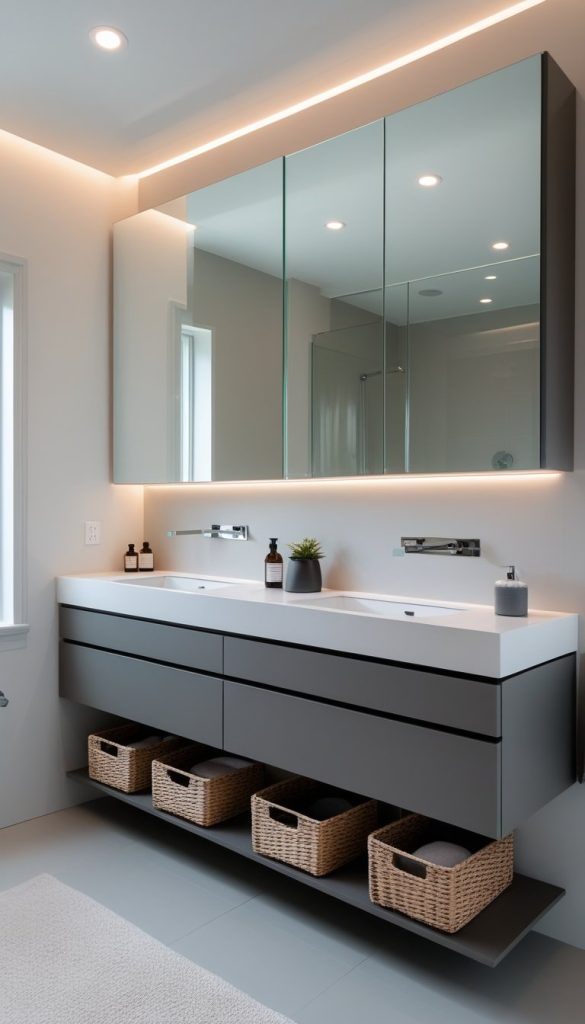
A floating vanity attaches directly to the wall, leaving the floor clear. This makes the room feel wider and allows light to move through the space. You can also use the area underneath for baskets or open storage.
In longer bathrooms, a double vanity can still work if you choose a slim design. Look for narrow countertops and integrated sinks that don’t extend too far into the walkway.
Floating vanities also allow you to adjust the height, which can improve comfort and accessibility. Pair them with mirrored cabinets to add storage without extra bulk.
Best uses:
- Floating vanity → compact bathrooms needing storage
- Double vanity → long layouts where two sinks are practical
Shower Enclosures and Glass Showers

A framed tub shower combo often feels heavy in a narrow space. Switching to a glass shower enclosure reduces visual barriers and makes the room feel more open. Clear glass panels let light pass through, preventing the boxed in effect.
Sliding or bi fold doors save even more room compared to hinged doors. A walk in glass shower with a slim base is another option that maximizes floor area.
For added efficiency, choose wall mounted fixtures inside the shower. This keeps the layout streamlined and avoids bulky controls that stick out.
Benefits of glass showers:
- Expands visual space
- Improves light flow
- Offers flexible door options for tight layouts
Maximizing Storage in Narrow Bathrooms

Efficient storage comes from using overlooked areas like wall height, corners, and recessed spaces. By combining vertical units, open shelving, and well placed cabinets, you can keep essentials organized without making the room feel crowded.
Vertical Storage Solutions

When floor space is limited, vertical storage makes the most impact. Tall cabinets or tower units can hold towels, toiletries, and cleaning supplies without intruding into walkways.
You can install floor-to-ceiling cabinets along one wall to maximize capacity. Slim designs, about 12–18 inches deep, work best in narrow layouts because they provide storage without blocking movement.
Over the toilet shelving is another way to use forgotten space. Wall mounted cabinets or ladder style shelves above the toilet allow you to store everyday items within reach while keeping the area tidy.
Floating and Recessed Shelves

Floating shelves add storage without heavy bulk. They mount directly to the wall, leaving the floor clear and the room feeling more open. You can stagger them at different heights for toiletries, plants, or small baskets.
Corner floating shelves are especially useful in tight bathrooms. They fit into unused angles and can hold shower products or decorative items. Choosing glass or acrylic shelves helps maintain a light, uncluttered look.
Recessed shelves, built into the wall cavity, save even more space. These niches are ideal for showers or above sinks, giving you storage that doesn’t stick out. Proper waterproofing is important if you place them in wet areas.
Smart Cabinet Placement

Cabinets should be placed where they add storage without blocking movement. A wall mounted vanity with drawers keeps the floor open, while still offering organized storage beneath the sink.
Medicine cabinets with mirrored doors serve a dual purpose: they provide storage for small items while reflecting light to make the room feel wider.
You can also use shallow cabinets along one wall to store essentials without crowding the walkway. Choosing sliding or upward-opening doors prevents bumping into obstacles in narrow layouts.
Strategic cabinet placement ensures you gain storage while keeping the bathroom comfortable to move through.
Smart Design Details and Finishing Touches

Small adjustments in layout and finishes can make a narrow bathroom easier to use and more comfortable. The right door style, lighting plan, and tile design can all add function while improving the sense of space.
Pocket Doors and Doorway Solutions

A standard swinging door takes up valuable floor area in a narrow bathroom. Replacing it with a pocket door that slides into the wall frees up space and avoids conflicts with fixtures. If installing a pocket door isn’t possible, consider a barn style sliding door or a bi fold door that folds in half.
Pay attention to the door swing if you must keep a hinged door. A door that opens outward into the hallway instead of inward can immediately improve usability. This small change ensures the pathway inside remains clear and avoids bumping into the vanity or toilet.
You can also use frosted glass doors to allow light through while maintaining privacy. This option helps brighten a narrow bathroom without the need for extra windows.
Lighting Strategies for Small Spaces

Narrow bathrooms often feel darker because of limited natural light. A layered lighting plan helps solve this. Start with recessed ceiling lights for general illumination, then add wall sconces or vertical lights on both sides of the mirror for tasks like shaving or makeup.
Avoid placing a single light directly above the mirror, as it creates harsh shadows. Instead, side lighting provides even coverage across the face. If you prefer a decorative option, small pendant lights over the vanity can add style without overwhelming the space.
Choose bulbs with a warm white tone (around 2700K–3000K) to balance cooler wall colors. This keeps the bathroom from feeling too stark. For extra efficiency, install dimmers so you can adjust brightness depending on the time of day.
Tile Patterns and Visual Tricks

Tile choice has a major impact on how wide or long your bathroom feels. Large-format tiles with fewer grout lines create a cleaner look and make the room feel less busy. If your bathroom is long and narrow, laying floor tiles in a horizontal pattern can visually widen the space.
For walls, consider vertical subway tiles or stacked tiles that draw the eye upward. This adds height and reduces the tunnel effect common in galley style bathrooms. Using the same tile on both floor and walls can also create a seamless, more open look.
Mirrored or glossy tiles reflect light and help brighten the room. If you want contrast, use a darker accent tile on one wall to create depth, while keeping the rest of the surfaces light to maintain an airy feel.
Frequently Asked Questions

Designing a narrow bathroom requires careful planning of layouts, fixture sizes, and storage options. You need to balance comfort with efficiency while making sure every inch of space serves a purpose.
How can a shower be efficiently incorporated into a long narrow bathroom layout?
Place the shower at the far end of the room to keep the walkway clear. A glass panel or walk-in shower without a bulky frame helps the space feel open. Sliding or bi fold shower doors save more room than a swing door.
What are some effective design strategies for remodeling a tiny bathroom with both a shower and a toilet?
Keep both fixtures on the same wall to create a straight, linear layout. This leaves one side free for movement. A wall mounted toilet paired with a compact shower enclosure or wet room setup reduces crowding.
What are the ideal dimensions for a long, narrow bathroom to ensure comfort and functionality?
A width of at least 5 feet allows enough room for a toilet and vanity on one side with clear passage. For showers, aim for at least 32 inches square, though 36 inches or more is more comfortable. Lengths of 9–11 feet typically fit all main fixtures.
How can tubs be effectively integrated into narrow bathroom designs without compromising space?
Choose a shorter tub, such as a 48 54 inch model, instead of the standard 60 inch size. Alcove tubs work well in narrow layouts since they fit flush against three walls. A tub shower combo is a practical option when you can’t dedicate space to both.
What are the key considerations for choosing compact fixtures in a small bathroom renovation?
Look for wall mounted sinks, vanities, and toilets to free up floor space. Narrow vanities with trough sinks provide function without taking up depth. Always check that there is at least 21 inches of clearance in front of toilets and sinks for comfort.
What storage solutions maximize space in a galley style bathroom design?
Use vertical storage such as tall cabinets, floating shelves, or recessed niches. A mirrored medicine cabinet adds both storage and the illusion of depth. Built in shelving above the toilet or between studs can provide hidden storage without reducing floor area.

