

How to Create a Nursery Nook in a Shared Room
Bringing a baby home is one of life’s most exciting milestones — but what if your home doesn’t have a dedicated nursery? Whether you live in a cozy apartment, share a bedroom with your little one, or simply prefer to keep your baby close, creating a nursery nook in a shared room can be the perfect solution.
The idea of a nursery nook is simple: carve out a dedicated baby space within your existing bedroom, living room, or guest room. With a little creativity, smart furniture choices, and thoughtful organization, you can design a cozy, functional, and stylish mini nursery that blends seamlessly with your existing space.
In this ultimate guide, we’ll explore practical tips, creative designs, and space-saving solutions to help you set up a nursery nook that works beautifully for both you and your baby — all while keeping comfort, safety, and style in mind.
1. Why Create a Nursery Nook?

Before diving into design details, let’s talk about why small nursery room ideas are becoming so popular.
1.1 Maximizes Limited Space

If you live in a small home or apartment, space is at a premium. A nursery nook lets you use every inch efficiently without needing a separate room.
1.2 Keeps Baby Close

For night feedings, diaper changes, and general peace of mind, having your baby right there in the same room makes life easier.
1.3 Budget-Friendly

You save money by avoiding the cost of furnishing and decorating a whole nursery — instead, you invest in essential items only.
1.4 Smooth Transition

Your baby will adapt naturally to your presence, and transitioning to their own room later will be easier.
2. Plan Your Nursery Nook Like a Pro

Before buying furniture or décor, start with a solid plan.
2.1 Measure Your Space

- Identify the available area in your shared room.
- Note wall length, height, and nearby outlets.
- Consider traffic flow so you’re not squeezing past furniture.
2.2 Choose the Best Location

- Near your bed for quick nighttime access.
- Away from windows to avoid drafts and bright sunlight.
- Not directly under ceiling fans or heaters.
2.3 Visually Define the Baby Zone

- Use an area rug, wall decals, or even a different paint color to create a defined nursery section without building walls.
3. Essential Furniture for a Nursery Nook

When space is limited, every piece must be functional, safe, and space-saving.
3.1 Mini Crib or Bassinet

- A mini crib fits into tight corners yet lasts longer than a bassinet.
- Folding cribs are great if you need to reclaim space during the day.
3.2 Changing Pad Instead of a Full Changing Table

- Place a changing pad on top of your dresser or desk.
- Use a waterproof, easy-to-clean cover.
3.3 Multi-Functional Furniture

- Dressers with deep drawers double as storage + changing stations.
- Storage ottomans can hold blankets and serve as seating.
3.4 Wall-Mounted Shelves

- Keep wipes, creams, and diapers within arm’s reach.
- Floating shelves save floor space.
4. Smart Storage Solutions for Tiny Nurseries

Small nursery room ideas work best when everything has a place.
4.1 Go Vertical

- Pegboards for hanging baskets, pacifiers, and bibs.
- Tall shelving units for baby essentials.
4.2 Closet Hacks

- Install double rods to hang tiny clothes above and below.
- Add fabric bins or small drawers for accessories.
4.3 Under-Crib Storage

- Use rolling bins or baskets for swaddles, diapers, and extra bedding.
5. Design & Décor Tips for a Shared Room Nursery

Your nursery nook should feel intentional, cozy, and stylish.
5.1 Light & Airy Color Palette

- White, cream, blush, soft gray, or pale sage make the space feel larger.
- Avoid overly dark tones that can make small spaces feel cramped.
5.2 Unisex Nursery Themes

- Woodland animals, celestial skies, clouds, or rainbow pastels work for both boys and girls.
5.3 Layered Lighting

- Dimmable lamps for nighttime feedings.
- Fairy lights or wall sconces for gentle ambiance.
5.4 Personal Touches

- Name signs, framed family photos, or a growth chart add personality.
6. Safety Considerations in a Shared Space

Safety is crucial, especially in a multi-use room.
- Anchor dressers and shelves to the wall.

- Keep small objects, cords, and sharp items out of reach.

- Avoid hanging heavy décor above the crib.

- Ensure crib slats meet current safety standards.

7. Noise & Light Control for Better Sleep
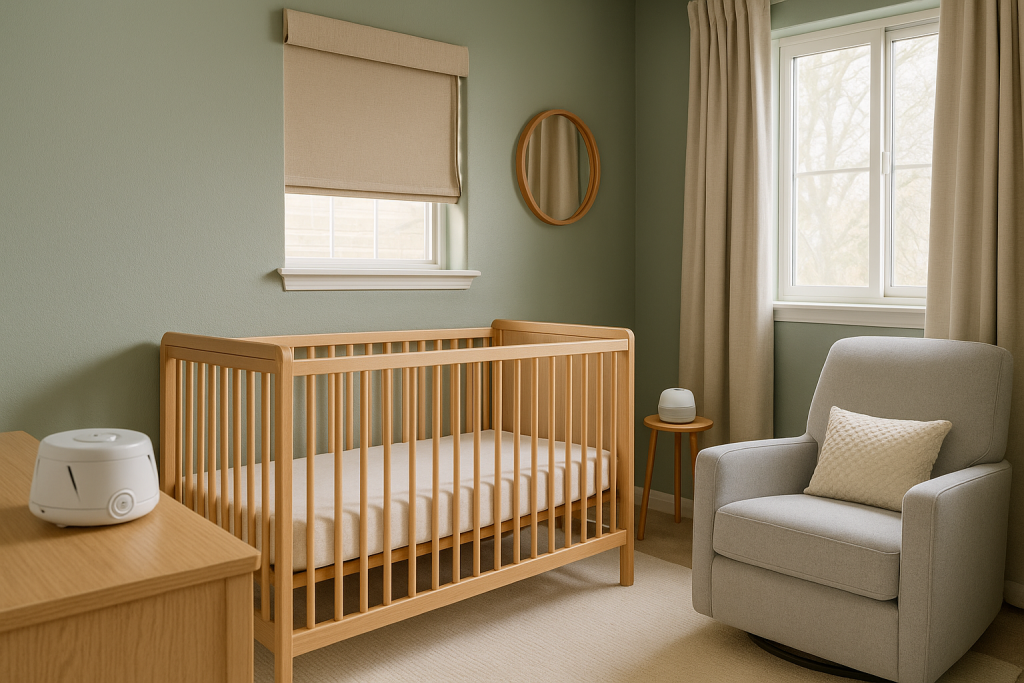
Your baby’s sleep environment matters.
- Use blackout curtains to block sunlight.

- White noise machines help mask household sounds.

- Keep a consistent bedtime routine even in a shared space.

8. Easy Organization & Maintenance Tips

- Rotate clothing monthly as your baby grows.

- Keep a laundry bin nearby to avoid mess.

- Label storage baskets for quick diaper changes.

- Declutter regularly to keep the space functional.

9. Real-Life Nursery Nook Layout Ideas

9.1 Corner Nursery Nook

Place a mini crib in the corner with shelves above — compact yet cozy.
9.2 Master Bedroom Partition

Use a room divider or curtain to separate baby’s space from your sleeping area.
9.3 Living Room Day Nursery

If you work from home, turn part of your living space into a flexible nursery nook.
10. Budget-Friendly Nursery Nook Hacks

- Buy second-hand furniture and repaint it.

- Use removable wallpaper to create a feature wall.

- DIY storage baskets from inexpensive materials.

11. Final Thoughts
A nursery nook proves that you don’t need a huge home or a separate nursery to create a loving, functional space for your baby. By focusing on small nursery room ideas that maximize space, prioritize safety, and embrace creative design, you can make your shared room both beautiful and practical.
The key is intentional design — every item you choose should serve a purpose while making the space feel warm and inviting. With the tips in this guide, your nursery nook can become a comforting haven for your little one while keeping your room stylish and clutter-free.


