

How to Set Up a Nursery in Your Bedroom (Without Sacrificing Sleep)
Sharing your bedroom with your baby doesn’t mean sacrificing your sleep, sanity, or style. In fact, with the right setup, you can create a calming, beautiful, and functional nursery nook inside your own room—even if you’re tight on space.
Whether you’re a city-dwelling parent in a one-bedroom apartment, or just planning for those first few months with baby nearby, this guide offers practical tips, smart furniture choices, and sleep-friendly design ideas that really work in small spaces.
Let’s dive into how to set up a nursery in your bedroom without losing sleep (or floor space).
1. Measure & Map the Layout
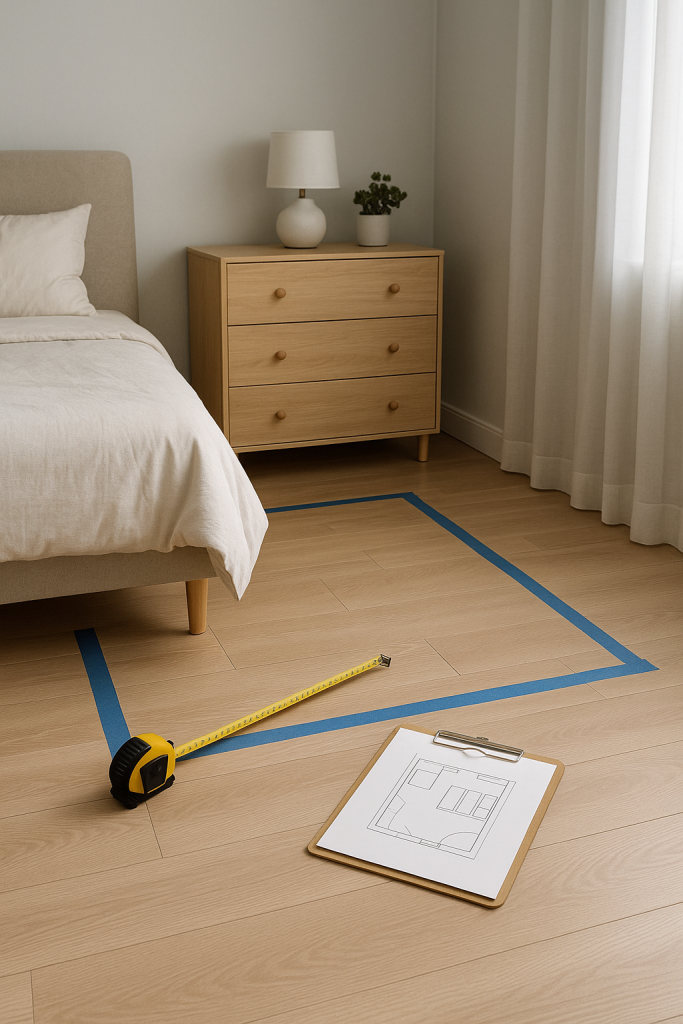
Start by measuring your bedroom and drawing a quick layout. Identify unused corners, spaces near walls, or areas beside your bed where a crib or bassinet can safely fit. Use tape to mark floor space and test how it feels to walk around it.
Don’t forget to leave clearance for dresser drawers, closet doors, and your own movement at night.
2. Choose a Sleep-Friendly Zone

Avoid placing your baby’s crib near a window, heater, or air conditioner. Look for a quiet, draft-free spot with limited exposure to outside noise and light.
Tip: If there’s no perfect corner, place the crib on the side of your bed furthest from the door for a more peaceful sleep zone.
3. Stick to a Minimalist Floor Plan

Shared bedrooms work best with minimalism. Skip bulky furniture and choose only the essentials:
- Mini crib or bassinet
- Dresser that doubles as a changing station
- Diaper caddy or small cart
- Soft night lamp
Fewer items = more space, less stress.
4. Create Visual Separation Without Walls

You don’t need drywall to divide a room. Use:
- A sheer curtain or canopy around the crib
- A tall bookshelf as a divider
- A large area rug to define baby’s zone
This adds a sense of separation, making your bedroom feel like two spaces in one.
5. Design a Night-Friendly Flow
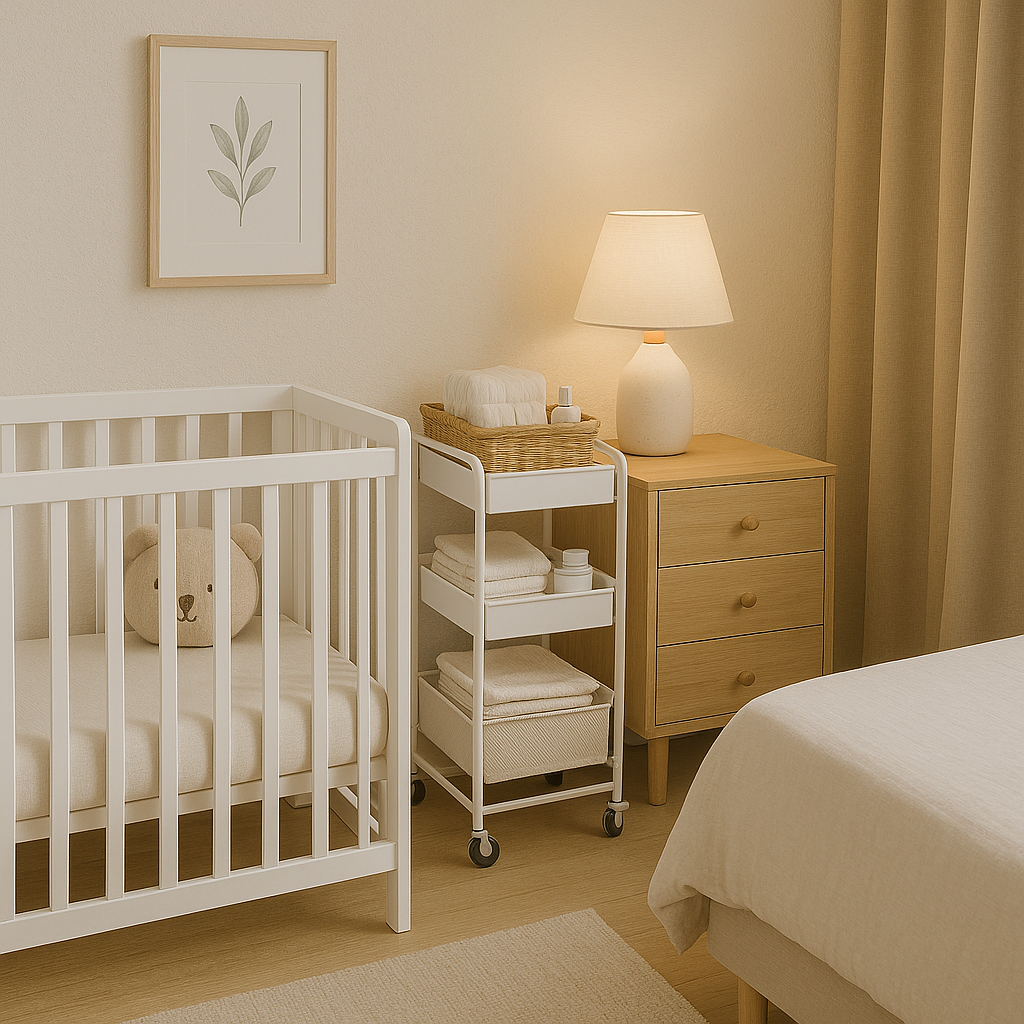
Your goal is simple: don’t wake everyone up during night feeds. Keep things like diapers, wipes, pacifiers, burp cloths, and a water bottle for yourself within arm’s reach.
Set up a soft light and organize items in a cart or drawer next to your bed.
6. Mini Cribs or Bassinets for Tight Corners

Mini cribs and bassinets are ideal for small bedrooms. Look for foldable or rolling models that can be repositioned or tucked away during the day.
Choose one with built-in storage underneath to make every inch count.
7. Crib with Built-in Storage or Under-Crib Drawers

Opt for a crib with drawers, baskets, or bins below. These are perfect for storing swaddles, sheets, diapers, and clothing.
Eliminate the need for extra furniture.
8. Wall-Mounted Changing Station or Dresser-Top Pad

Instead of a bulky changing table, mount a fold-down station on the wall or place a secure pad on top of your dresser.
Save floor space and maintain storage access below.
9. Multi-Use Rocking Chair or Glider with Storage Ottoman

Select a slim, modern rocking chair with an ottoman that opens up. You’ll get comfort for feeding and hidden storage all in one.
Tuck away blankets, toys, or burp cloths inside.
10. Rolling Cart as a Portable Diaper Station

Load up a 3-tier cart with diapers, wipes, onesies, creams, and burp cloths. Wheel it to your bedside at night and park it in a closet by day.
Mobile storage = flexible organization.
11. Foldable or Hanging Laundry Hamper

Use a soft hamper that hangs on the closet door or folds flat when empty. Save space while managing laundry efficiently.
Bonus: choose a design that matches your nursery decor.
12. Wall-Mounted Diaper Organizer or Caddy
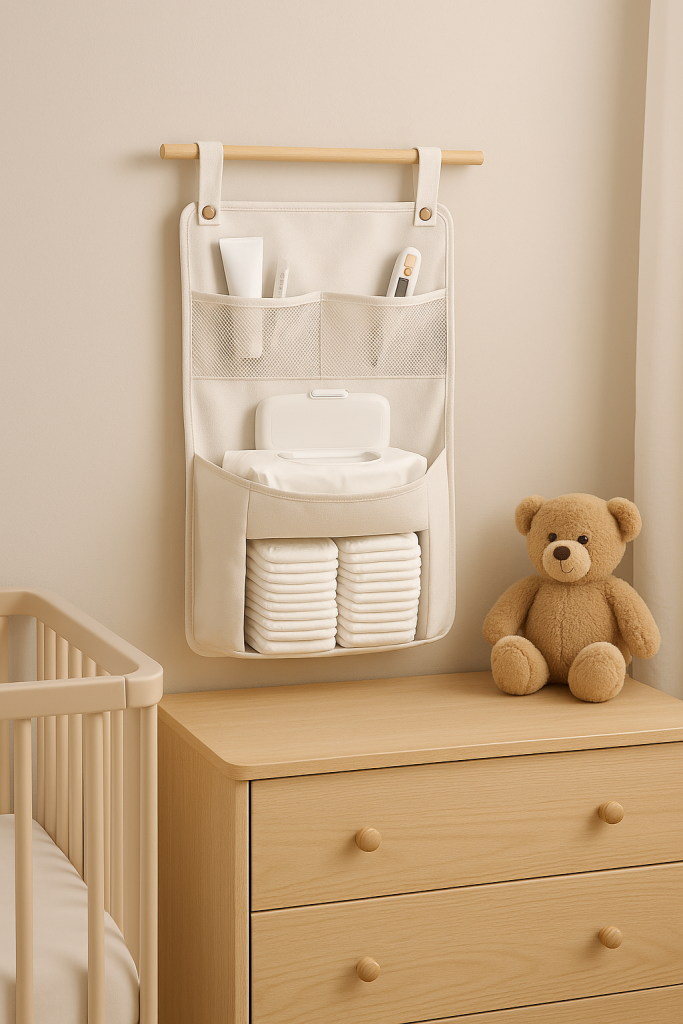
Install a wall organizer near your dresser or crib. Store diapers, ointments, wipes, and thermometers within reach—no need for drawer clutter.
Make late-night changes smoother and faster.
13. Floating Shelves or Vertical Storage Towers

Go vertical! Mount floating shelves above the dresser or beside the crib for extra storage. Use labeled bins or baskets to stay organized.
Keep floor space clear while storing more.
14. Use the Closet for Dual Use (Baby + Yours)

Share the closet by dividing hanging space and adding stackable drawers or cloth bins for baby gear. Hanging shelf organizers also work wonders.
Customize for both baby and parent without overstuffing.
15. Drawer Organizers for Tiny Baby Clothes
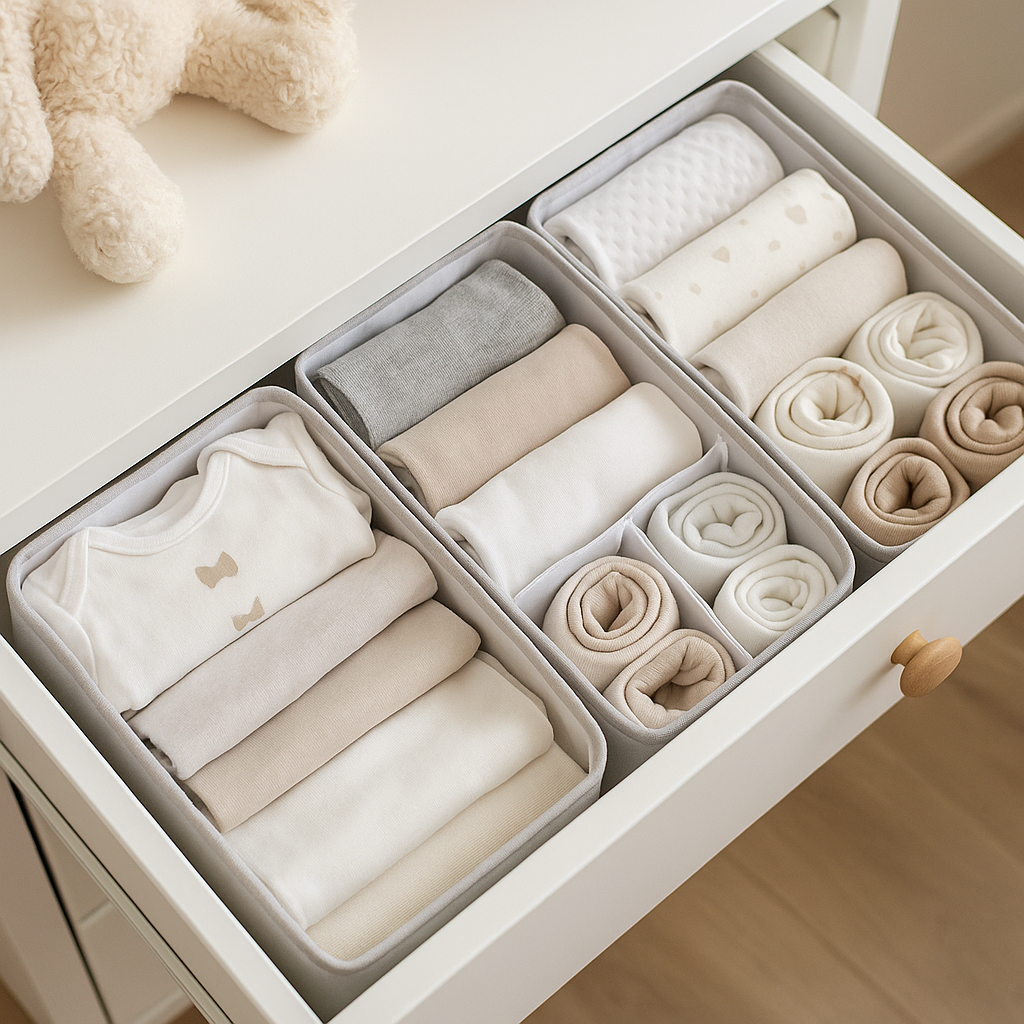
Use soft dividers to keep baby clothes neat and accessible. Sort by category or size, and label each section for speed.
No more rummaging for socks in the dark.
16. Over-the-Door Storage for Diapers, Toys, etc.
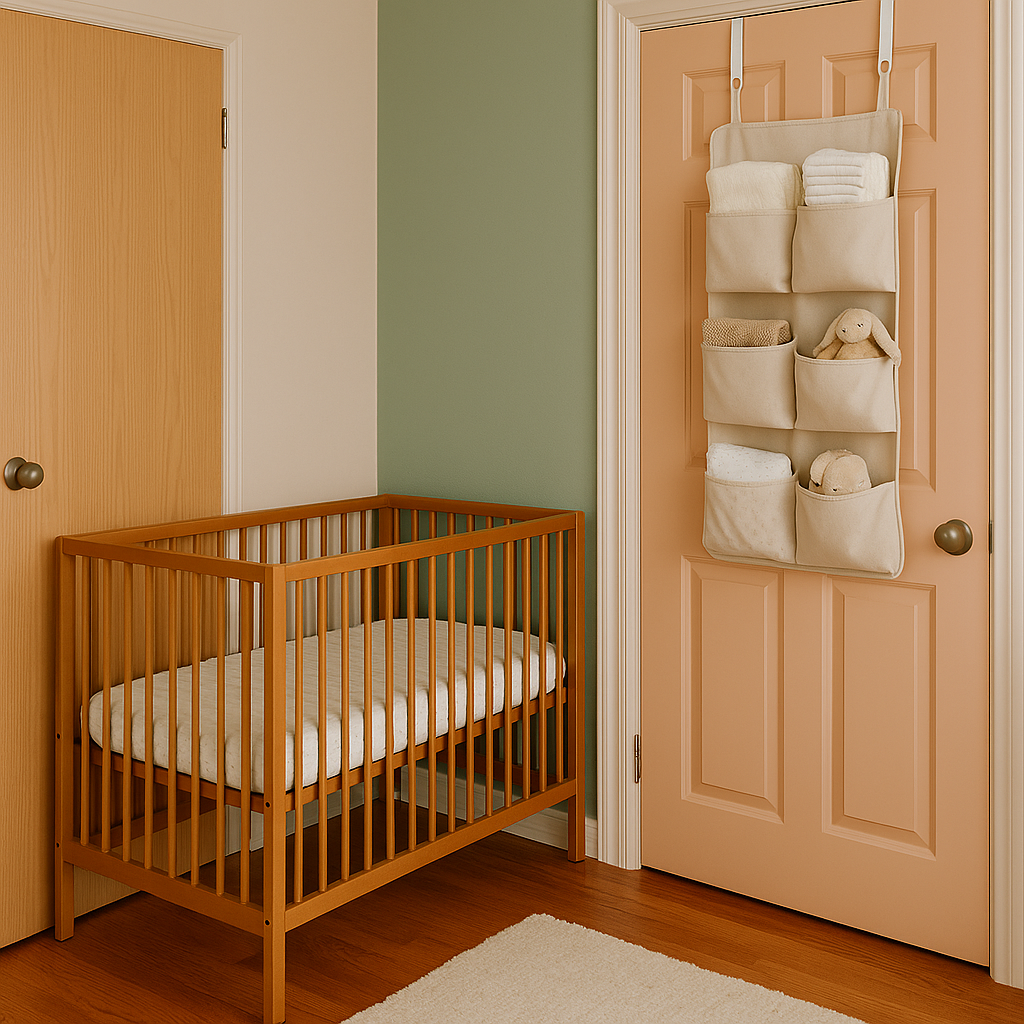
Hang a shoe organizer over your bedroom or closet door and fill it with bibs, pacifiers, onesies, and toys. It’s a game changer.
Instant vertical storage without tools.
17. Soft Baskets Under the Bed or Dresser

Slide collapsible storage baskets under the bed or dresser to keep seasonal items or backup supplies hidden yet accessible.
Perfect for apartment living where space is tight.
18. Hooks on Walls or Wardrobe Sides

Install adhesive hooks for towels, clothes, or nursing accessories. Place them beside the changing area or on closet doors.
No tools or drilling required for renters.
19. Use Blackout Curtains or Shades for Better Sleep

Create a dark sleeping environment for both you and baby using blackout window treatments. Light control = longer naps.
Essential for shared bedrooms with early morning light.
20. Opt for Soft Night Lights or Red Light Lamps
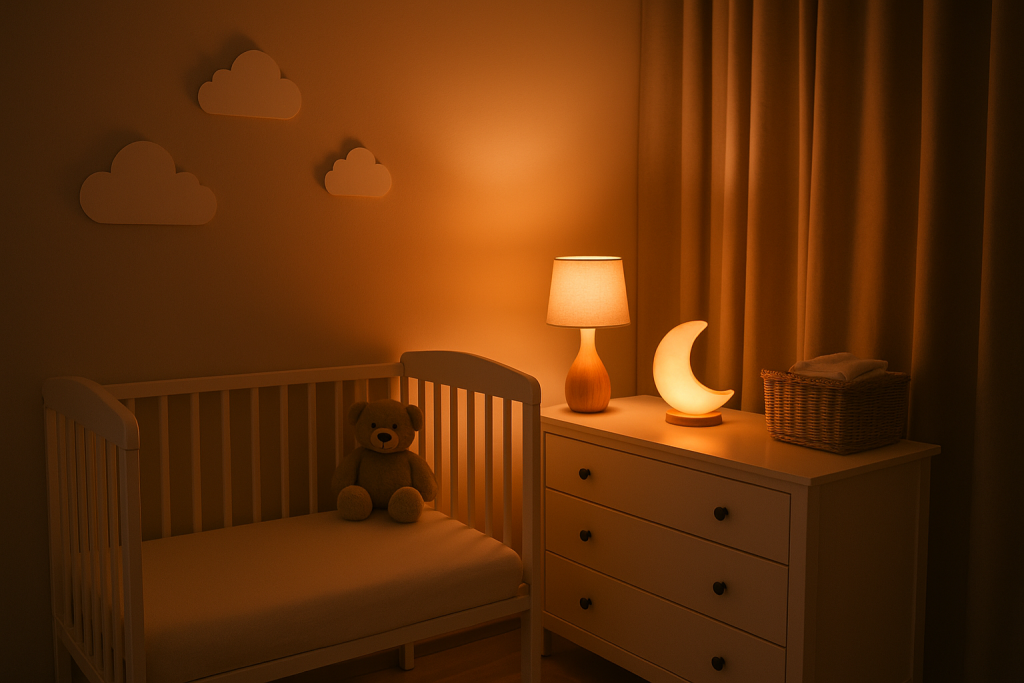
Use a dim, warm nightlight to avoid disrupting your baby’s circadian rhythm (and yours). Red-toned lamps are best.
Gentle on sleepy eyes at 3 a.m.
21. Use a White Noise Machine to Block Distractions

A sound machine helps drown out noises—especially useful if your bedroom faces a busy street or shares a wall with a bathroom or kitchen.
Soothing and sleep-inducing for everyone.
22. Choose Calming Colors for the Nursery Area
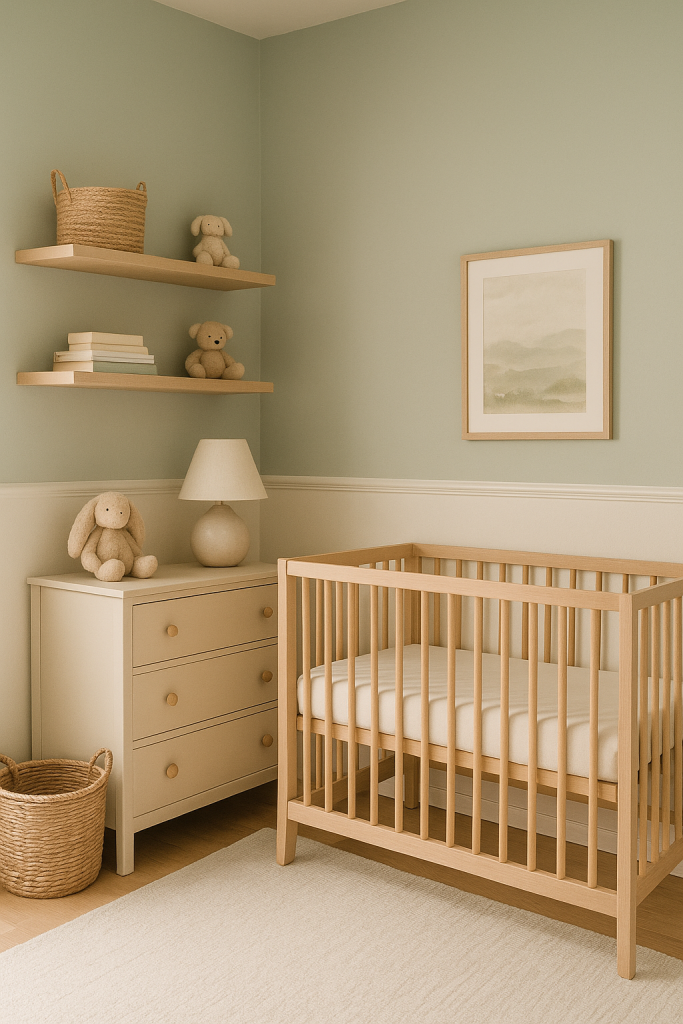
Use soft pastels, beiges, grays, or sage tones for the baby area. These shades promote relaxation and visual harmony.
Avoid overly bright or busy patterns in small shared spaces.
23. Declutter Your Side for Mental Calmness

A clean space helps reduce stress, especially when sharing. Keep your nightstand minimal and store personal items out of sight.
A peaceful parent = a peaceful nursery.
24. Removable Wallpaper or Wall Decals

Decorate your nursery nook with peel-and-stick wallpaper or wall decals to add personality without permanent changes.
Great for renters or temporary setups.
25. Add a Rug to Visually Define Baby’s Area

Use a soft rug beneath the crib or bassinet to define the nursery space. Choose a washable, low-pile option for practicality.
Grounds the area and adds warmth.
26. Create a Mobile or Art Wall Above the Crib

Hang a simple mobile or framed art above the crib to personalize the space. Stick to soft shapes and muted tones.
Avoid anything too heavy or glass-framed.
27. Incorporate Baby-Friendly Plants or Soft Lighting

Add a small potted plant (non-toxic) or a soft LED light to brighten the area. It creates a fresh, peaceful vibe.
Even one touch of green can calm the space.
28. Add Personal Touches—Name Signs, Toys, Frames

Personalize the nursery nook with your baby’s name, photos, or a soft toy display. These elements make it feel warm and intentional.
Even in a shared room, your baby can have a special space.
Final Thoughts: A Beautiful Balance
You don’t need a spare room to give your baby a safe, soothing, and stylish nursery. With thoughtful planning and compact furniture, your bedroom can double as a comforting retreat for both of you.
By following these space-saving, sleep-friendly small nursery room ideas, you can create a peaceful setup that works beautifully from day to night—without sacrificing your rest or sanity.


