

15 Retro & Vintage Living Room Styles Making a Stunning Comeback in 2025
Old living room styles are making a big return in 2025. Homeowners are bringing back retro and vintage looks from past decades to create spaces with more personality and charm. These classic designs offer a fresh alternative to modern minimalist trends.

The comeback includes popular elements from different time periods. Mid-century modern furniture, bold 70s colors, and Art Deco patterns are showing up in homes again. People are mixing vintage pieces with modern touches to create unique living spaces that feel both nostalgic and current.
1) Mid-Century Modern Furniture

Mid-century modern furniture brings clean lines and sleek designs to today’s living rooms. This style from the 1950s and 1960s focuses on simple shapes without extra decoration.
Teak wood pieces are popular choices for this look. Coffee tables, sideboards, and TV stands in warm teak add natural beauty to any space.
Iconic lounge chairs serve as statement pieces. The Eames lounge chair and similar designs offer both comfort and style. These chairs often feature leather upholstery and wooden frames.
Low-profile sofas work well in mid-century spaces. They sit close to the ground and have straight, simple lines. Neutral colors like beige, gray, or brown complement the clean aesthetic.
Storage furniture doubles as decor in this style. Credenzas and room dividers provide function while maintaining the minimalist feel. They often feature sliding doors and geometric patterns.
Dining sets include round or rectangular tables with tapered legs. The chairs typically have molded seats and simple backs. These pieces blend form with function perfectly.
The furniture emphasizes natural materials like wood and leather. Metal accents in brass or chrome add shine without overwhelming the space.
2) Art Deco Geometric Patterns

Art Deco brings bold geometric shapes back to modern living rooms. These patterns first became popular in the 1920s and 1930s.
Zigzag lines, sunburst designs, and stepped patterns define this style. These shapes appear on wallpaper, rugs, and furniture pieces.
Chevron patterns work well on accent walls. They create visual interest without overwhelming the space.
Geometric tiles make striking backsplashes or fireplace surrounds. Black and white combinations offer classic appeal.
Furniture often features angular lines and stepped details. Coffee tables and cabinets showcase these design elements.
Area rugs with bold geometric prints anchor the room. They tie together different furniture pieces and colors.
Wall art displays strong geometric shapes in metallic frames. These pieces serve as focal points in the living space.
Throw pillows with Art Deco patterns add instant style. They work on both modern and vintage furniture.
The key is balance when using these patterns. Too many competing designs can make a room feel busy.
Start with one statement piece featuring geometric patterns. Then add smaller accents to complete the look.
3) 70s Rattan Accents

Rattan furniture defined 1970s living rooms with its natural texture and casual vibe. This woven material brought an earthy, relaxed feeling to homes across America.
Rattan chairs became iconic pieces during this era. Peacock chairs with their dramatic high backs made bold statements in living rooms. Papasan chairs offered cozy spots for reading and relaxation.
Coffee tables and side tables made from rattan added organic shapes to square rooms. These pieces worked well with other natural materials like wood and stone.
Today’s designers are bringing rattan back in fresh ways. Modern rattan pieces blend the 70s aesthetic with current comfort standards.
Homeowners can find affordable rattan at thrift stores and garage sales. These vintage pieces often need minimal restoration to look great again.
Rattan works especially well in sunrooms and casual living spaces. It pairs nicely with plants and creates a natural, outdoor-inspired atmosphere indoors.
The material’s light color and open weave help rooms feel bright and airy. This makes rattan perfect for smaller spaces that need visual breathing room.
4) Velvet Upholstery

Velvet furniture brings instant luxury to retro living rooms. This rich fabric was a staple in 1970s homes and remains popular today.
Deep jewel tones work best for authentic vintage appeal. Emerald green, sapphire blue, and burgundy create bold focal points. These colors pair well with wood furniture and brass accents.
Velvet sofas serve as statement pieces in retro spaces. The soft texture adds warmth and comfort. Many homeowners choose sectional sofas or curved designs for that classic 70s look.
Accent chairs in velvet offer another styling option. Swivel chairs or low-profile armchairs capture the decade’s casual vibe. Mix velvet pieces with other retro materials like rattan or chrome.
The fabric reflects light differently than other materials. This creates visual interest and depth in living rooms. Velvet also hides pet hair and minor stains better than smooth fabrics.
Modern velvet furniture uses improved manufacturing techniques. Today’s pieces resist crushing and last longer than vintage options. This makes velvet a practical choice for busy households.
Pair velvet upholstery with shag rugs and geometric patterns. Add brass coffee tables or wooden side tables to complete the retro aesthetic.
5) Brass and Gold Metallics

Brass and gold metallics bring instant warmth to vintage living rooms. These metals create a polished look without overwhelming the space.
Gold accents work well in both modern and retro styles. They make rooms feel inviting and elegant while staying trendy.
Brass fixtures add authentic 70s charm. Table lamps, picture frames, and cabinet hardware in brass create that nostalgic feel.
Small metallic touches make big impacts. Gold throw pillows, brass candlesticks, or metallic side tables add sparkle without major changes.
These warm metals pair beautifully with earth tones. Browns, oranges, and deep greens from the 70s complement brass and gold perfectly.
Mix different metallic finishes for depth. Brushed brass with shiny gold creates visual interest while staying cohesive.
Metallic wall art brings vintage glamour. Gold-framed mirrors or brass wall sculptures capture that retro sophistication.
Use metallics sparingly for best results. Too much can feel heavy, but the right amount adds just enough shine to complete the vintage look.
6) Mirrored Surfaces

Mirrored surfaces are making a strong comeback in retro living room design. These reflective elements add instant glamour and help create the illusion of more space.
Mirrored walls work especially well behind seating areas or entertainment centers. They bounce light around the room and make small spaces feel larger.
Mirrored furniture pieces like coffee tables and side tables bring vintage elegance to any room. These items reflect the Art Deco style that was popular in the 1920s and 1930s.
Homeowners can add mirrored accents through smaller pieces too. Picture frames with mirrored borders or decorative mirror tiles create subtle sparkle without overwhelming the space.
The key is using mirrors strategically rather than covering entire walls. A few well-placed mirrored elements can transform a living room’s atmosphere.
Mirrored surfaces pair well with metallic accents and rich fabrics. This combination creates the luxurious feel that defines many vintage design styles.
Clean mirrors regularly to maintain their reflective quality and visual impact.
7) Bold Color Blocking

Bold color blocking brings the vibrant energy of 70s decor into modern homes. This technique uses large blocks of contrasting colors to create striking visual impact.
Primary colors like red, blue, and yellow work best for authentic retro appeal. These bright hues capture the playful spirit of vintage design trends.
Designers often pair complementary colors on opposite walls. Orange and blue create dynamic tension. Green and pink offer unexpected charm.
Color blocking works on furniture too. A bright yellow sofa against a deep purple accent wall makes a powerful statement. Bold chairs in contrasting colors add instant retro flair.
The key is balance and intentional placement. Too many competing colors create chaos rather than style. Choose two or three main colors and use them consistently throughout the space.
Paint is the easiest way to achieve this look. Large geometric shapes painted directly on walls create dramatic focal points. Rectangular blocks in different sizes add visual interest.
This technique transforms plain rooms into conversation starters. The bold approach reflects the confident spirit of retro design movements that celebrated color and creativity.
8) Terrazzo Flooring

Terrazzo flooring is making a strong comeback in 2025 living rooms. This speckled material was popular in mid-century homes and public buildings.
The flooring features chips of marble, granite, or glass set in cement. These chips create unique patterns and textures that add visual interest to any space.
Modern terrazzo offers both retro charm and contemporary appeal. Homeowners can choose from traditional speckled designs or sleeker modern versions.
The material works well in living rooms because it’s extremely durable. It can handle heavy foot traffic while maintaining its attractive appearance for decades.
Terrazzo pairs beautifully with vintage furniture and retro decor. The flooring complements mid-century modern sofas, vintage coffee tables, and retro lighting fixtures.
Installation costs can be higher than basic flooring options. However, the long-lasting nature makes it a smart investment for homeowners who want lasting style.
The flooring comes in many color combinations. Popular choices include neutral tones with white or cream chips, or bold options with colorful stone pieces.
Terrazzo brings authentic vintage character to modern living spaces. It connects today’s homes to the design trends of the 1950s and 1960s.
9) Reclaimed Wood Furniture

Reclaimed wood furniture brings authentic vintage character to any living room. This eco-friendly choice supports sustainability while creating beautiful spaces.
The weathered textures and natural patina of reclaimed wood add instant charm. Each piece tells a unique story through its aged appearance and distinctive markings.
Coffee tables made from reclaimed barn wood create stunning focal points. The rustic grain patterns and natural imperfections make each table one-of-a-kind.
Reclaimed wood shelving units offer both storage and style. They pair perfectly with vintage decor and modern accessories alike.
Entertainment centers crafted from salvaged materials blend function with retro appeal. The warm wood tones complement various color schemes and design elements.
Side tables and accent pieces in reclaimed wood add texture without overwhelming the space. These smaller furniture items work well in both large and compact living rooms.
The natural fibers and organic materials align with current vintage revival trends. Reclaimed wood furniture connects modern homes with authentic historical elements.
This sustainable choice reduces environmental impact while delivering timeless style. The durability of aged wood ensures these pieces will last for years to come.
10) Retro TV Stands

Retro TV stands bring vintage charm to modern living rooms. These furniture pieces combine classic design with today’s storage needs.
Mid-century modern styles lead the trend. Walnut wood finishes and clean lines create timeless appeal. These stands work well with flat-screen TVs up to 80 inches.
Many retro stands feature sliding doors and slatted fronts. These details add authentic vintage character. The designs hide cables and store media equipment neatly.
Engineered wood construction ensures durability. Adjustable shelves accommodate different device sizes. This flexibility makes retro stands practical for modern electronics.
Dark brown and teak finishes remain popular choices. These colors match other retro furniture pieces. Green accents sometimes appear in bolder vintage designs.
Cable management systems keep wires organized. This feature maintains the clean retro aesthetic. Hidden storage compartments reduce living room clutter.
Retro TV stands suit various room sizes. Compact options work in smaller spaces. Larger units provide extensive storage for bigger rooms.
The nostalgic appeal attracts many homeowners. These stands connect modern technology with past design eras. They serve as functional furniture that doubles as conversation pieces.
11) Vintage Wall Art

Vintage wall art brings instant character to retro living rooms. These pieces create focal points that transport spaces back in time.
Art Deco prints work well in rooms with bold geometric patterns. The clean lines and metallic accents match vintage furniture perfectly.
Mid-century modern artwork adds sophistication to retro spaces. Abstract prints and atomic-inspired designs capture the era’s optimistic spirit.
Retro travel posters bring nostalgic charm to walls. These colorful advertisements from past decades create conversation starters.
Botanical prints offer timeless appeal in vintage rooms. Old-style illustrations of plants and flowers add natural beauty without overwhelming the space.
Black and white photography creates dramatic vintage statements. Classic portraits or cityscapes from earlier decades work especially well.
Gallery walls mix different vintage art styles together. Combining various frames and artwork sizes creates an authentic collected-over-time look.
Antique mirrors serve as both art and functional pieces. Ornate frames from past eras reflect light while adding decorative interest.
The key is choosing pieces that feel authentic to the chosen decade. Reproductions work fine as long as they capture the original style and mood.
12) Chunky Knit Throws

Chunky knit throws bring instant warmth and texture to retro living rooms. These thick, cozy blankets add natural layers that soften hard furniture edges.
The cable knit design works perfectly with vintage decor styles. These blankets complement both mid-century modern furniture and 70s-inspired spaces.
Homeowners can drape chunky throws over sofas, chairs, and beds. The thick texture creates visual interest without overwhelming the room’s design.
Neutral colors like cream, beige, and soft gray work best for vintage looks. These shades blend with existing furniture while adding cozy appeal.
The oversized knit pattern adds handmade charm to modern spaces. This texture pairs well with other vintage elements like wood furniture and patterned rugs.
Chunky throws serve both style and function purposes. They keep people warm during afternoon naps while acting as accent pieces when not in use.
These blankets work especially well in living rooms with exposed brick or wood paneling. The soft texture balances harder architectural elements common in retro homes.
Quality chunky knit throws last for years with proper care. They maintain their shape and texture through regular washing and use.
13) Patterned Area Rugs
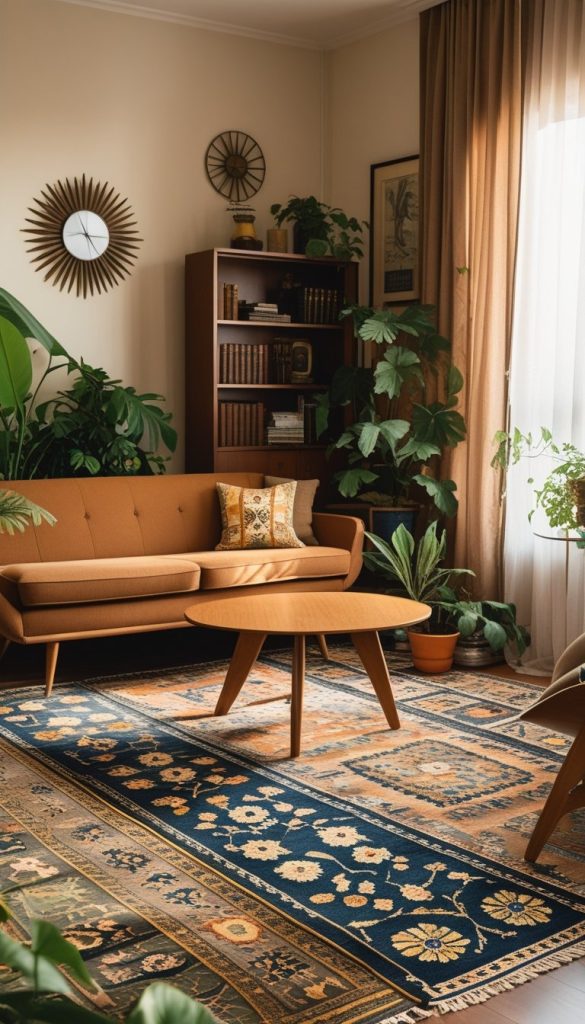
Bold patterned rugs are making a strong return to living rooms in 2025. These statement pieces bring instant character and warmth to any space.
Geometric patterns from the 60s work well in modern settings. The sharp lines and bold shapes create visual interest without overwhelming the room.
Shag rugs with colorful wave patterns capture the 70s Scandinavian style perfectly. These designs add texture and movement to hardwood floors.
Vintage-inspired Persian and Oriental patterns offer timeless elegance. They pair beautifully with both traditional and contemporary furniture pieces.
Designers recommend choosing rugs with colors that complement existing decor. The pattern should be the focal point while supporting the overall room design.
Large area rugs help define seating areas in open floor plans. They create cozy conversation spaces that feel intimate and welcoming.
Retro runner rugs work well in hallways and narrow spaces. These pieces extend the vintage theme throughout the entire home seamlessly.
The key is balancing bold patterns with simpler furnishings. Let the rug be the star while keeping other elements more subdued for best results.
14) Floral Wallpaper

Floral wallpaper brings instant vintage charm to living rooms. The classic patterns create a nostalgic feel that works well with retro furniture pieces.
Vintage floral designs come in many styles. Homeowners can choose from bright 70s-inspired patterns or more subtle damask florals from earlier decades.
These wallpapers work best as accent walls. A single feature wall prevents the pattern from overwhelming the space while still making a strong design statement.
Peel and stick options make installation easier than traditional wallpaper. This allows people to experiment with vintage floral patterns without permanent commitment.
The key is matching the floral style to the overall retro theme. Bold, colorful flowers suit 70s-inspired rooms. Delicate botanical prints work better for earlier vintage styles.
Floral wallpaper pairs well with mid-century modern furniture. The combination creates a cohesive retro look that feels both nostalgic and fresh.
Kitchens and bathrooms also benefit from retro floral wallpaper. These smaller spaces can handle bolder patterns that might be too much in larger living areas.
The timeless appeal of floral wallpaper makes it a smart choice for vintage-loving homeowners.
15) Retro Lighting Fixtures

Retro lighting fixtures serve as both functional elements and striking conversation pieces in vintage-inspired living rooms. These fixtures bridge the gap between past and present design styles.
Mid-century modern sconces add warmth and character to contemporary spaces. Art Deco chandeliers create dramatic focal points that anchor room designs.
Vintage-style restoration lighting celebrates the honest appeal of weathered finishes. Rather than hiding signs of age, these fixtures embrace the patina that comes with time.
Statement pendant lights work well as focal points in minimalist living rooms. A large vintage lantern in an entryway creates immediate visual impact.
Nautical-style fixtures and farmhouse island lights bring purposeful charm to retro spaces. These designs were originally created for specific functions, adding authentic character.
Retro lighting from the early 1900s through the 1960s offers appealing, honest design. These fixtures were built for function first, creating timeless appeal.
Mixing vintage lighting with modern decor creates balanced interiors. A mid-century chandelier can anchor a room while keeping surrounding elements contemporary.
Glass fixtures with vintage bronze finishes work both indoors and outdoors. These versatile pieces add rustic charm throughout the home.
Frequently Asked Questions

These questions address common concerns about creating creating authentic retro living rooms, from selecting the right furniture pieces to choosing colors that capture vintage charm while maintaining modern comfort.
What are some essential elements to incorporate in a 70s inspired living room decor?
Rattan furniture forms the backbone of authentic 70s decor. Look for curved rattan chairs, coffee tables, and plant stands.
Earth tones define the 70s color palette. Use burnt orange, mustard yellow, and chocolate brown throughout the space.
Shag rugs add texture and authenticity. Choose thick pile rugs in neutral or earth tones to anchor seating areas.
Macrame wall hangings bring handmade 70s charm. Hang them above sofas or in empty wall spaces for instant vintage appeal.
How can I blend modern and vintage chic aesthetics in my living room?
Start with vintage furniture as anchor pieces. Add modern lighting and technology to keep the space functional.
Mix old and new textiles thoughtfully. Pair vintage velvet pillows with contemporary throw blankets on modern sofas.
Balance ornate vintage pieces with clean lines. A mid-century modern coffee table works well with an antique armchair.
Use neutral walls as a backdrop. This allows both vintage and modern pieces to shine without competing.
What kinds of retro wall art are trending for living rooms in 2025?
Geometric art deco prints are making a strong comeback. Choose pieces with gold accents and bold shapes.
Vintage travel posters add color and personality. Frame authentic or reproduction posters from the 60s and 70s.
Black and white photography creates timeless appeal. Look for architectural or portrait photography from past decades.
Abstract prints in earth tones complement retro furniture. Choose pieces with organic shapes and muted colors.
Can you suggest ways to add a cozy vibe to a retro-themed living room?
Layer different textures throughout the space. Combine velvet cushions, wool throws, and leather furniture for warmth.
Use warm lighting instead of bright overhead fixtures. Table lamps with fabric shades create intimate atmospheres.
Add plenty of soft furnishings. Stack pillows on sofas and drape throws over chair backs.
Include natural elements like plants and wood. These materials soften hard edges and add organic warmth.
What furniture pieces are considered must-haves for a vintage living room design?
A mid-century modern sofa serves as the focal point. Look for pieces with clean lines and tapered legs.
Velvet armchairs add luxury and comfort. Choose deep jewel tones or rich earth colors for authentic appeal.
A wooden coffee table with geometric details completes the seating area. Teak and walnut are popular vintage wood choices.
Brass accent tables provide both function and style. These pieces work well as side tables or plant stands.
How do I choose color schemes for a living room that evoke a retro yet timeless feel?
Earth tones create the most versatile retro palette. Brown, orange, and gold work well with many vintage styles.
Primary colors in muted tones feel retro but not overwhelming. Choose dusty blue, soft red, and creamy yellow.
Add brass and gold metallics as accent colors. These warm metals complement most vintage color schemes.
Keep neutral walls to ground bold furniture choices. Cream, beige, or soft gray walls provide flexible backdrops.


