

Eclectic Living Room Design: A Guide to Stylish, Cohesive Spaces
Creating an eclectic living room can feel tricky because it balances freedom with structure. You want a space full of personality, but you don’t want it to look chaotic or cluttered. The key is combining different styles, colors, and textures in a way that feels intentional and cohesive. With the right approach, you can design a room that feels bold, inviting, and uniquely yours.

You don’t need to stick to one era or design trend. Mix a modern sofa with a vintage coffee table, layer patterns with shared colors, and add bold accents that bring energy without overwhelming the space. By repeating certain shapes, tones, or materials, you create harmony even when your furniture and decor come from different styles.
Simple adjustments like using a consistent color palette, layering textures for depth, and curating accessories with care make the difference between a space that feels curated versus messy. With a few practical strategies, you can transform your living room into a space that celebrates individuality while still looking polished.
Key Takeaways
- Balance variety with a consistent color palette
- Mix furniture and textures with intention
- Use curated accents to add personality without clutter
Core Principles of Eclectic Living Room Design

An eclectic living room works best when you mix styles with intention, keep visual order through color and texture, and avoid clutter that makes the space feel disorganized. The goal is to create a living space that feels layered, personal, and cohesive without losing comfort or function.
Defining Eclectic Style

Eclectic style combines different eras, materials, and design elements into a single living space. Instead of sticking to one theme, you bring together pieces that reflect your taste, such as a mid century sofa with a modern lamp or a vintage rug under a sleek coffee table.
This approach allows you to highlight variety while still creating a unified look. Contrast is key smooth metals against rough wood, bold prints beside solids, or antique furniture paired with streamlined shapes.
The style also thrives on personal touches. Display travel finds, family heirlooms, or handmade items alongside store bought décor. These meaningful details keep your eclectic living room from feeling like a showroom and make it feel like your own.
Finding Balance and Cohesion

Balance is what separates eclectic living room design from random decorating. You can layer patterns, colors, and textures, but you need a system to tie them together. A shared color palette works as the anchor, even when styles differ.
For example, if you use blues and neutrals as your base, you can mix a patterned rug, velvet cushions, and a rustic wooden table without the room feeling chaotic. The repeated tones create cohesion.
You also need to consider scale and proportion. Pairing a large sectional with small side tables can feel awkward. Instead, choose furniture that works together in size and height to maintain flow.
A simple way to check balance is to step back and look at the room as a whole. If one piece dominates in a distracting way, adjust placement or add complementary items to even it out.
Common Mistakes to Avoid
One common mistake is adding too many statement pieces at once. A living room full of bold furniture, oversized art, and patterned rugs can overwhelm the eye. Limit focal points to one or two and let the rest of the décor support them.
Another issue is ignoring negative space. Filling every corner with decor makes the room feel cramped. Leave some open wall or floor space so your eclectic style has room to breathe.
Avoid mixing without intention. Throwing together random items without considering color, texture, or scale leads to clutter. Use a checklist:
- Color palette: Are the tones connected?
- Texture balance: Do rough and smooth surfaces complement each other?
- Proportion: Do the pieces fit together in size?
By watching for these mistakes, you keep your eclectic living room design from slipping into disorder and maintain a space that feels curated instead of messy.
Establishing a Cohesive Color Palette
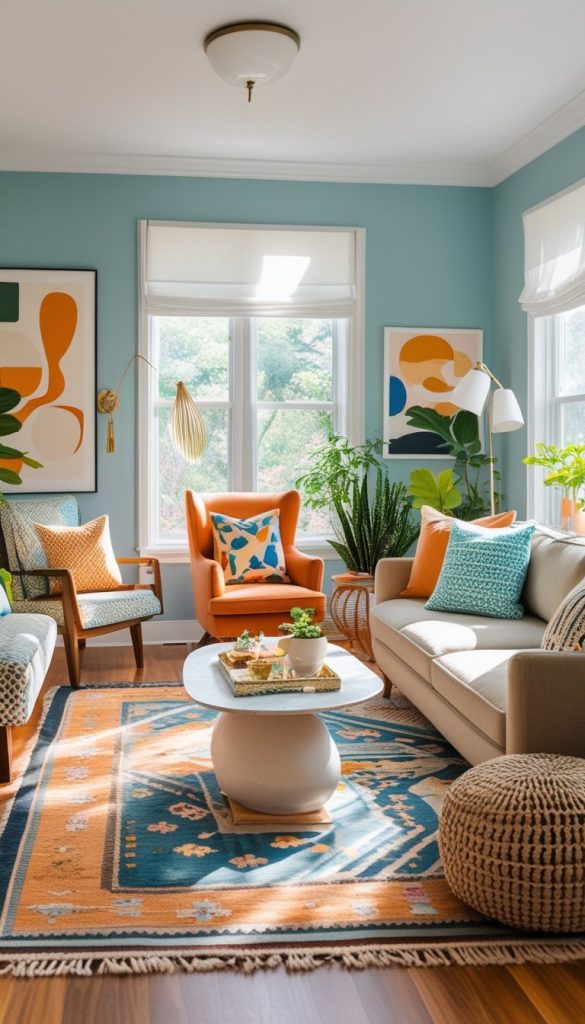
A successful eclectic living room depends on color choices that balance variety with order. You create harmony by grounding the space with a neutral base, introducing bold accents carefully, and repeating shades through decor and art to tie the room together.
Choosing a Neutral Base

Start with a neutral base to keep your eclectic mix from feeling chaotic. Shades like white, beige, gray, or soft taupe provide a backdrop that lets your furniture and decor stand out. A neutral wall color also makes it easier to layer in patterns and textures without overwhelming the space.
You can apply neutrals across large surfaces such as walls, rugs, or sofas. This creates a foundation that absorbs visual variety and prevents clashing. For example, a cream colored sofa can balance a patterned chair or a bold rug.
Neutrals also help highlight art and paintings. A gallery wall with colorful frames or prints feels more intentional when displayed against a calm background. Think of the neutral base as the canvas that allows your eclectic pieces to shine.
Adding Bold Accents

Once you establish a base, add bold accents for energy and personality. Accent colors can come through throw pillows, side chairs, lamps, or even a painted feature wall. These pops of color bring excitement without overwhelming the room.
A good approach is to choose 1–2 strong colors that contrast with your neutral base. For example:
- Navy blue pillows on a beige sofa
- Mustard yellow lamp against a gray wall
- Emerald green chair beside a neutral rug
Keep in mind that accents should feel deliberate. Too many bold shades can create clutter, while a few focused choices make the room feel layered and cohesive.
Repeating Colors for Unity

Color repetition is what ties everything together. Use your chosen shades in multiple places through textiles, decor, and even small details like vases or picture frames. This creates a rhythm that guides the eye around the room.
For instance, if you introduce teal in a chair, repeat it in a throw blanket or a piece of wall art. A color that appears at least three times in different ways feels intentional rather than random.
You can also use patterns that mix your accent colors with neutrals. A patterned rug that includes your main shades helps unify the palette while adding depth. Repetition keeps your eclectic living room visually connected and avoids a scattered look.
Mixing Furniture Styles Without the Mess

A balanced eclectic living room depends on choosing the right foundation pieces, keeping proportions in check, and mixing eras with intention. The right tables and storage elements also help unify the space and prevent clutter from taking over.
Selecting Anchor Pieces

Start with one or two anchor pieces that set the tone for the room. A sofa often works best for this role since it dominates both scale and style. Whether you choose a sleek modern sofa or a tufted vintage couch, this piece should guide your other furniture choices.
Pair your anchor with a media console or coffee table that shares a similar material or finish. For example, a walnut sofa frame works well with a walnut console, even if the shapes differ. Keeping consistency in at least one element wood tone, upholstery, or structure helps tie the room together.
Use neutral fabrics for the anchor items if you plan to bring in patterned or colorful accent chairs later. This prevents the space from looking overloaded while still giving you room to experiment with smaller pieces.
Blending Vintage and Modern Furniture

Mixing modern furniture with vintage finds works best when you focus on contrast that feels intentional. A mid century armchair can sit comfortably next to a contemporary sectional if both share a common detail, like tapered legs or clean lines.
Balance polished surfaces with worn textures. A rustic wooden bookcase can complement a glossy lacquered side table if the scale and finish don’t compete. The mix should feel curated, not random.
If you add ornate vintage accent chairs, pair them with a simple coffee table or side tables to avoid visual clutter. When each piece has a clear role, the room feels layered but not chaotic.
Scale and Proportion in Seating

Pay close attention to scale when combining sofas, armchairs, and accent chairs. A bulky sectional can overwhelm delicate seating if the proportions are too far apart. Keep the seat heights within a few inches of each other so the arrangement feels balanced.
Think about how the seating relates to your tables. A low, modern sofa pairs better with a short coffee table, while taller armchairs need slightly higher side tables. This keeps the flow consistent and avoids awkward gaps.
Arrange seating in a way that encourages conversation. Place chairs across from a sofa rather than scattering them unevenly. This not only improves comfort but also makes the mix of styles look intentional.
Using Multifunctional Tables

Tables often bridge the gap between different furniture styles. A multifunctional coffee table with hidden storage or nesting side tables can serve both practical and design needs. These pieces reduce clutter, making it easier to mix bold furniture without the room feeling messy.
Pair an upholstered ottoman with a tray to double as a table. This softens a room with many angular modern pieces and adds flexibility. Ottomans also work well with sectionals when you want extra seating.
Shelving and bookcases also play a role. A simple open shelf can hold both modern decor and vintage objects, blending styles while keeping surfaces organized. By choosing versatile tables and storage, you create cohesion even when your seating styles vary.
Layering Patterns and Textures for Depth

Creating depth in an eclectic living room depends on how you combine different textiles, patterns, and finishes. You can use contrast, balance, and repetition to make the space feel intentional rather than cluttered.
Combining Textiles and Materials

Start with a mix of textiles that bring both comfort and character. Velvet cushions, linen curtains, or a leather armchair each add their own tactile quality. When layered together, they create variety without relying only on color.
Think about pairing opposites. A smooth glass coffee table feels more grounded when placed near a chunky knit throw. A soft wool rug under a sleek leather sofa balances hard and soft finishes.
Use accessories to highlight these layers. Items like woven baskets, rattan side tables, or bouclé ottomans add subtle detail. Keep each material visible by avoiding too many items in the same finish. This way, every texture has space to stand out.
Pattern Mixing Techniques

Patterns bring energy to eclectic interiors, but they need order to avoid looking chaotic. Start by choosing a base pattern such as stripes or geometric prints. Then layer in secondary patterns like florals or tribal motifs in smaller doses.
A simple method is to vary the scale. Large scale prints on rugs or curtains work well with smaller designs on pillows or accessories. This prevents the eye from feeling overwhelmed.
Stick to a shared color palette. Even bold patterns feel cohesive when they share two or three main colors. For example:
| Large Element | Secondary Element | Accent |
|---|---|---|
| Striped rug | Floral cushions | Abstract art |
This approach lets you mix styles while keeping visual order.
Balancing Soft and Structured Elements

Depth comes from balancing soft layers with structured pieces. Upholstered furniture in velvet or linen feels inviting, but it needs the contrast of wood, stone, or metal to avoid looking heavy.
Try combining a plush sofa with a solid wood coffee table. Or place a marble side table next to a fabric armchair. These contrasts highlight both comfort and structure.
Lighting also plays a role. A woven lampshade or linen pendant softens the glow, while a sleek metal fixture adds clarity. By alternating soft and structured surfaces, you create rhythm and prevent the room from leaning too far in one direction.
Curating Art and Accessories for Personality

Art and accessories shape how your eclectic living room feels. The right mix of wall art, objects, and personal items adds depth, prevents clutter, and makes the space reflect your style.
Gallery Walls and Statement Art

A gallery wall works well in eclectic living room decor because it allows you to mix paintings, prints, and photography without needing them to match perfectly. You can combine vintage portraits with modern abstract art as long as you repeat a color or frame style to keep balance.
Statement art also plays an important role. A single oversized painting above a sofa can anchor the room and keep smaller pieces from feeling scattered.
When arranging, test layouts on the floor before hanging. This helps you find a balanced design without making unnecessary holes. Mixing frame finishes like wood, black, and gold creates variety but still looks intentional when repeated throughout the wall.
Incorporating Sculptures and Objects

Sculptures and three dimensional pieces add texture and contrast to flat wall art. A ceramic bust, metal figure, or woven wall hanging can break up a room full of framed works. Place them on side tables, mantels, or open shelving to spread interest across the room.
Scale matters. A tall floor sculpture can draw the eye upward, while small decorative objects grouped together create impact without overwhelming.
Use a mix of materials for variety stone, wood, glass, or clay. Pairing smooth finishes with rough textures adds balance. Keep surfaces uncluttered by limiting accessories to a few strong pieces rather than many small ones.
Personal Touches and Unique Finds

An eclectic living room feels more authentic when you include items that reflect your life. Family photos, travel souvenirs, or thrifted artwork tell a story that mass-produced decor cannot.
Mixing personal accessories with traditional art makes the room feel lived in and layered. For example, a framed postcard from a trip can sit next to a classic oil painting without looking out of place.
Consider displaying collections, like vintage cameras or handmade pottery, in small groups. This gives the space character while keeping it organized. Your unique finds become conversation starters and reinforce the individuality of your decor.
Lighting and Ambience in Eclectic Spaces

Lighting shapes how your living room feels and functions. By mixing statement fixtures, layering different types of light, and making the most of natural light, you can create a space that feels intentional and balanced rather than cluttered.
Choosing Statement Lighting Fixtures

Statement lighting fixtures add personality and help anchor your room. A bold chandelier, oversized pendant light, or sculptural floor lamp can act as a focal point while tying together mixed furniture and patterns.
When choosing a fixture, pay attention to scale. A large chandelier works well in rooms with high ceilings, while smaller pendant lights or wall sconces suit compact spaces.
Mixing styles works best when you repeat a material or finish elsewhere. For example, a brass chandelier can connect with brass accents on a coffee table or cabinet handles. This creates a unifying thread without making everything match.
Avoid overcrowding the room with too many statement pieces. Select one main fixture to stand out, then support it with simpler lamps to keep the space cohesive.
Layering Ambient and Task Lighting

An eclectic living room works best when you layer different types of lighting. Ambient lighting provides general brightness, task lighting supports activities like reading, and accent lighting highlights artwork or architectural details.
Use ambient lighting as your base. This might be a ceiling chandelier, track lighting, or recessed fixtures. Then, add task lighting such as adjustable floor lamps near seating or table lamps on side tables.
Accent lighting can come from wall sconces, LED strips, or small spotlights. These add depth and prevent the room from feeling flat.
Dimmer switches are especially useful in eclectic spaces. They let you adjust brightness levels so your statement fixtures and supporting lights work together instead of competing.
Maximizing Natural Light

Natural light helps balance bold furniture and layered patterns. Large windows, skylights, or glass doors can make eclectic interiors feel open instead of heavy.
Keep window treatments light and simple. Sheer curtains or woven shades soften sunlight without blocking it. If you prefer heavier drapes, layer them so you can control how much light enters the room.
Position mirrors across from windows to reflect daylight deeper into the space. This not only brightens the room but also highlights your lighting fixtures when the sun goes down.
Try placing seating areas near sources of natural light. Reading chairs by a window or a sofa beside glass doors make use of daylight while reducing the need for constant artificial lighting.
Frequently Asked Questions

Creating an eclectic living room requires balance, planning, and attention to detail. You need to think about how different styles, colors, and textures interact so the space feels intentional rather than chaotic.
How can I achieve a modern eclectic look in my living room?
Start with a clean base using neutral walls or simple flooring. Add modern furniture pieces with sleek lines, then layer in vintage or global accents. Keep your color palette limited to a few main shades so the mix feels fresh and not overwhelming.
What are the key characteristics of an eclectic style interior design?
Eclectic design blends different time periods, textures, and cultural influences. The key is thoughtful curation, not random collecting. You’ll often see a mix of bold furniture, layered patterns, and a unifying color scheme that ties the room together.
How can I mix different furniture styles without creating clutter?
Choose one dominant style to guide most of your furniture choices. Then introduce contrasting pieces that share a similar material, color, or shape. Spread these items evenly across the room instead of grouping them in one spot.
What are some common mistakes to avoid in eclectic home decor?
Avoid over-accessorizing, which can make the room feel cluttered. Don’t ignore scale large furniture should be balanced with smaller accents. Also, resist the urge to include every piece you like; editing is just as important as adding.
Can you suggest ways to incorporate vintage elements into an eclectic living room?
Use one or two vintage statement pieces, such as a mid-century chair or antique coffee table, as anchors. Pair them with modern lighting or textiles to keep the room from looking dated. Vintage art, rugs, or ceramics also add character without overwhelming the space.
What strategies can be used to layer patterns effectively in a bold, eclectic space?
Stick to a consistent color palette when mixing patterns. Combine different scales such as a large floral rug with smaller geometric pillows. Limit yourself to three or four pattern types, repeating each at least once to create rhythm and cohesion.


